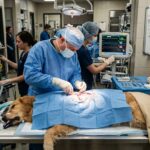
Splenectomy & Splenic Tumors in Pets – A splenectomy, also known as a veterinary splenectomy, is the surgical removal of the spleen and is a routinely performed, life-saving procedure in veterinary emergency and oncology practices. Splenectomy in dogs is most often performed for conditions such as a splenic tumor in dogs, a splenic mass in dogs, or in cases with a ruptured splenic tumor emergency that can cause sudden internal bleeding, collapse, and death if not treated promptly.
This guide explains what splenic tumors are, when splenectomy dog surgery is needed, how splenic tumor dog surgery is performed, recovery expectations, and long-term survival rates, for dog owners and veterinary education.
What is the Function of the Spleen?
The spleen provides many functions, including:
- Blood filtration and storage
- Assisting the immune system
- Removing old/damaged red blood cells
When dogs do not have a spleen, they can continue with their normal lives, which is one of many reasons why veterinary splenectomy is a safe and effective procedure when the spleen is damaged and requires removal.
What is a Splenic Tumor?
A splenic tumor in dogs occurs when an abnormal growth is found within the spleen. Splenic tumors can be either;
- Benign (non-cancerous)
- Malignant (cancerous)
The biggest risk associated with splenic tumors is that even though some may have no cancer, a splenic mass in a dog is often known to rupture and cause catastrophic bleeding.
Types of Splenic Tumors in Dogs
Common types of tumors occurring include hemangiosarcoma of the spleen in dogs, which is the most common malignancy of blood vessels that is likely to rupture and cause internal bleeding. Additionally, it tends to spread to other parts of the body, including the liver, lungs, and heart.
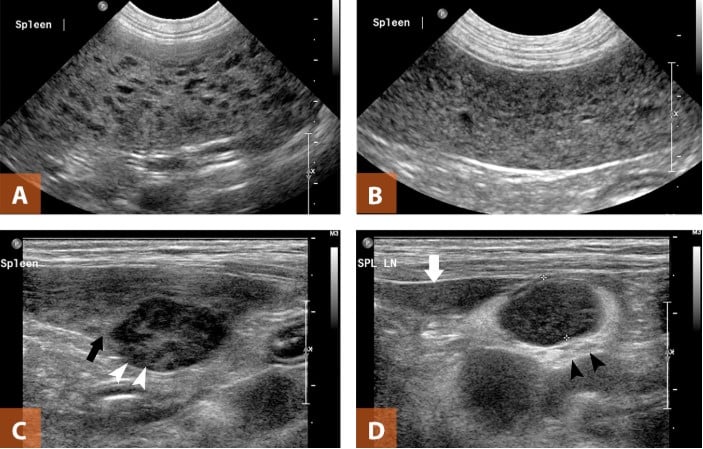
In addition, benign tumors may also occur in your dog’s spleen and may include hematomas, nodular hyperplasia, and hemangiomas. Both benign and malignant splenic masses in dogs appear the same on imaging.
Splenic Tumors in Cats
Cats are much less likely than dogs to develop a splenic tumor; however, if they do occur, lymphoma, mast cell tumors, and hemangiosarcoma are the most common types. With that said, cats often demonstrate only very subtle signs of having a splenic mass until late in the disease process.
Clinical Signs of Splenic Tumors
Signs of splenic mass can be very vague and may include:
- Lethargy
- Decreased appetite
- Weight loss
- Intermittent weakness
The signs above progress to an emergency if there is an impending rupture and bleeding associated with the splenic mass, which will present with immediate signs that would include:
- Sudden collapse
- Pale gums
- Rapid breathing
- Distended abdomen
- Weak pulses
- Shock
Sudden collapse in an older dog should be considered as a ruptured splenic tumor emergency until proven otherwise.
How are Splenic Tumors Diagnosed?
The most common methods used to diagnose splenic tumors include laboratory tests:
- Anemia (often regenerative)
- Clotting abnormalities
- Elevation of liver enzymes (if metastasis occurs).
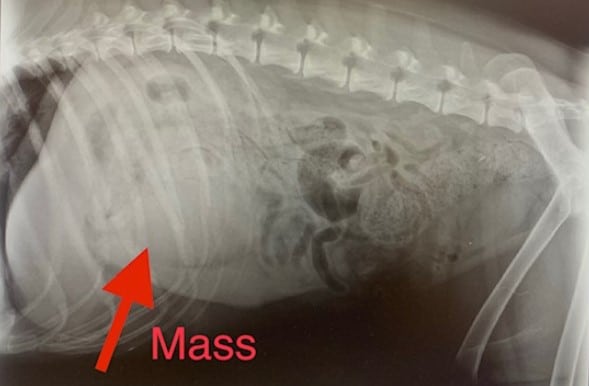
Imaging is often used to confirm the diagnosis of splenic tumors in dogs and includes;
- Ultrasound for the diagnosis of splenic masses in dogs and to look for internal bleeding
- X-rays to determine if there has been metastasis to the lungs
- FAST ultrasound to rule out potential for internal bleeding.
Due to the high risk of bleeding, a biopsy before splenectomy is avoided.
When is Splenectomy Necessary?
Veterinary splenectomy is recommended when:
- Diagnosis of a splenic mass in a dog
- Presence of internal bleeding
- Ruptured spleen
- Large or unstable masses
- Conditions that cannot rule out the possibility of cancer
In the splenectomy dog surgery, the veterinarian will be able to reach a diagnosis and treat any of these issues.
Pre-Operative Care
Critical care prepares an animal for splenectomy. Critical pets may need:
- IV fluids
- Blood transfusions
- Oxygen therapy
- Pain relief
Stabilization will happen as preparation for the splenic tumor dog surgery.
The Splenectomy Procedure
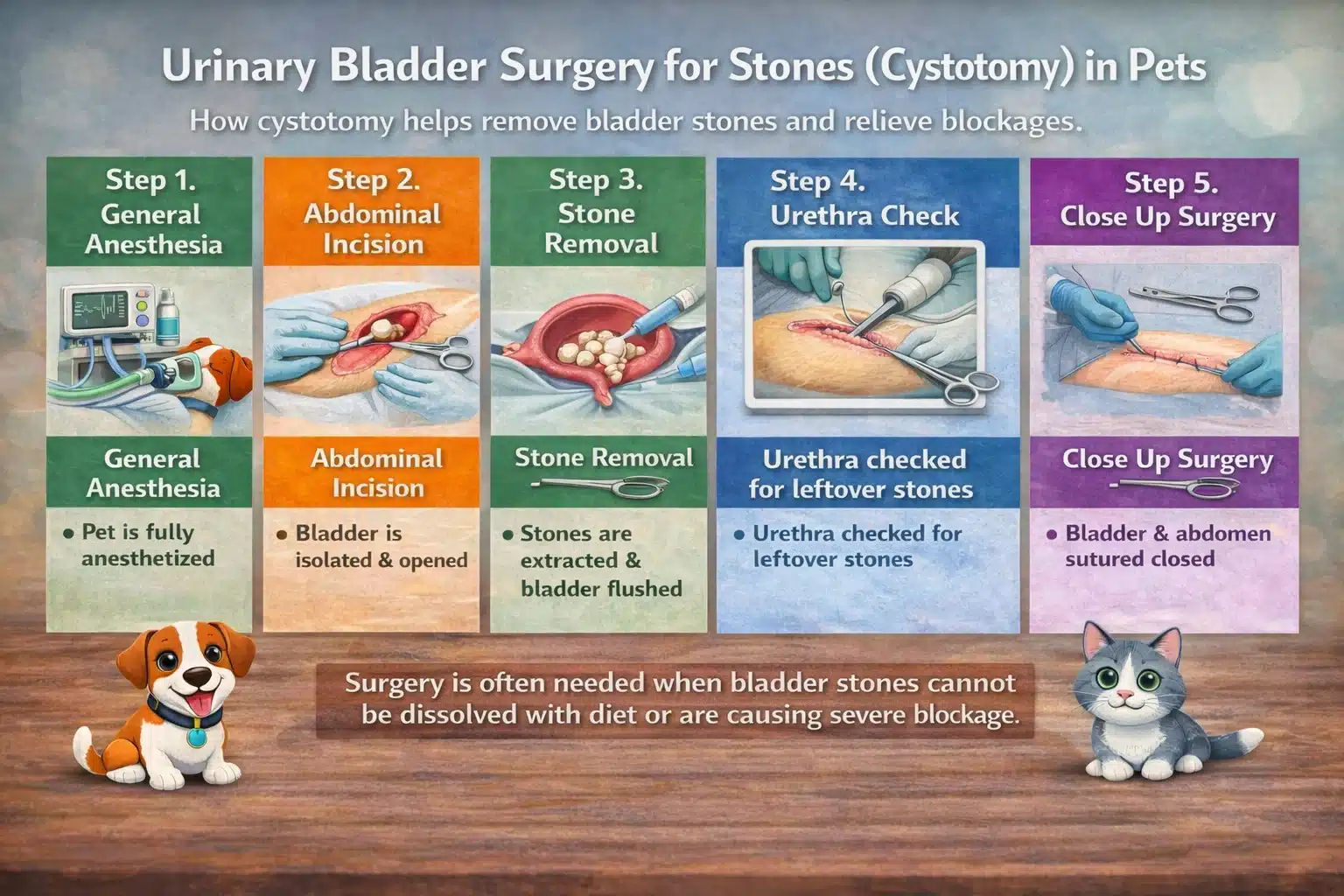
The basic procedure of a splenectomy typically consists of:
- General anesthesia
- Incision of the abdomen
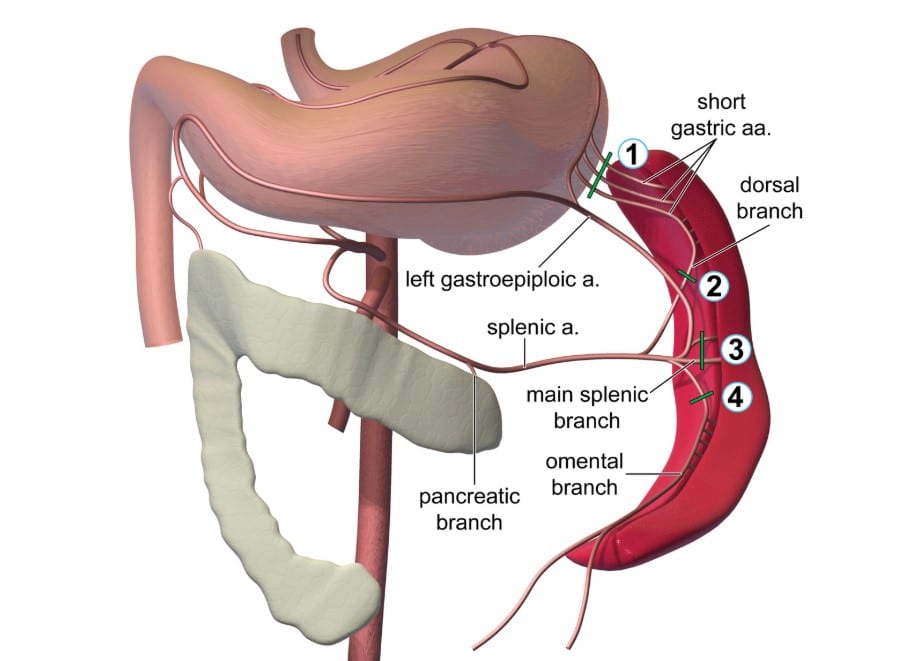
- Identification and ligation of splenic arteries
- Removal of the spleen
- Lavage of the abdominal cavity if there is bleeding
- Closure of the abdomen, with close monitoring
The operating time for a splenectomy for a dog is typically 60 – 90 minutes.
Postoperative Anesthesia and ICU Care
Dogs that are undergoing splenectomy are often at high risk of death from blood loss. Therefore, monitoring of vital signs, ECG unit, and re-transfusion of blood are typically done.
Most dogs will spend 2-5 days in the hospital recovering.
Recovery From Splenectomy
At Home (First 2 Weeks)
For the first two weeks at home after splenectomy, you should do the following:
- Strictly limit your dog’s activity
- Monitor the incision area daily
- Be aware of how much weakness your dog has and look for a pale or white discoloration of your dog’s gums.
- Complete all medication/hormonal medications prescribed to your dog
Typically, dogs will feel significantly better within a few days after a splenectomy dog surgery.
Splenectomy Prognosis (After Surgery)
The prognosis for dogs receiving a splenectomy depends on the type of tumor removed.
- Benign Tumors ( Hematoma / Hyperplasia): Excellent – The surgery will completely fix the problem.
- Hemangiosarcoma located only within the spleen: Guarded, additional cancer treatment may be required.
- Hemangiosarcoma with chemotherapy offers improved survival time
- Metastatic cancers: Poor.
The prognosis will be made after the entire affected splenic tissue is evaluated by the pathologist at the histopathology lab.
Role of Chemotherapy
As supplemental forms of therapy, chemotherapy may add an extension to the life expectancies of patients through palliation (length of time from commencement to the end of treatment). This would be accurate, especially for patients diagnosed with hemangiosarcoma of the spleen. Chemotherapy will not result in a cure but may improve the quality of life for the patients. It is recommended that an additional opinion be requested from a veterinary oncologist concerning the cancer treatment of their pet.
What Pet Owners Should Know
- Ruptured splenic tumors are common.
- Veterinary splenectomy procedures can save pet lives even if the final pathology is not yet known.
- Many canine patients return to a good quality of life after receiving a splenectomy as treatment for splenic tumors.
- The prognosis from the treatment received will depend upon the final pathology report results.
When to Seek Emergency Veterinary Care?
Emergency veterinary care should be sought immediately when any of the following have occurred:
- The patient collapsed (obtaining an emergency veterinary appointment).
- Gum color (pallor).
- Abdominal distension.
- Patient has a known splenic mass and is showing clinical signs of deterioration.
Delaying for any of the above will result in the death of the pet due to internal bleeding from a ruptured splenic tumor emergency.
Conclusion
A veterinary splenectomy represents one of the most life-saving emergency and oncological surgical procedures performed in veterinary medicine. Although splenic tumors such as hemangiosarcoma of the spleen in dogs are generally associated with poor prognoses, surgical removal (splenectomy) of the splenic tumor dog surgery represents a life-saving opportunity to stop internal bleeding and provide the owner time to better quality of life.
If you see any sign of sudden weakness or collapse in your pet (dog or cat), assume it is due to internal bleeding, and get them to the nearest veterinary emergency facility for evaluation immediately.
FAQs
Why will my dog have splenic surgery (splenectomy)?
Your dog may need to undergo a splenectomy because there is a possibility of internal bleeding from a splenic mass or tumor, or there is a risk of it rupturing. Emergency surgery will be performed to save the life of your dog.
Is splenectomy surgery high-risk for dogs?
Due to large amounts of blood loss, splenectomy surgeries can be high-risk. With timely stabilization before surgery and proper surgical technique, dogs have a strong chance of recovery without complications.
Will my dog still be able to have normal function and health without a spleen?
Yes, your dog will be happy and healthy without a spleen and will generally feel great after eliminating the bleeding process.
How long will it take your dog to recover from a splenectomy?
Your dog will likely show signs of improvement in approximately 2-3 days after the surgery. Full recovery from a splenic mass surgery usually takes 10-14 days, depending upon the type and extent of the mass and the level of activity the dog was allowed during the recovery period.
Are all splenic masses or tumors cancerous?
No, your dog may have an enlarged splenic mass that is benign. This can only be confirmed with histopathology after removing the spleen.