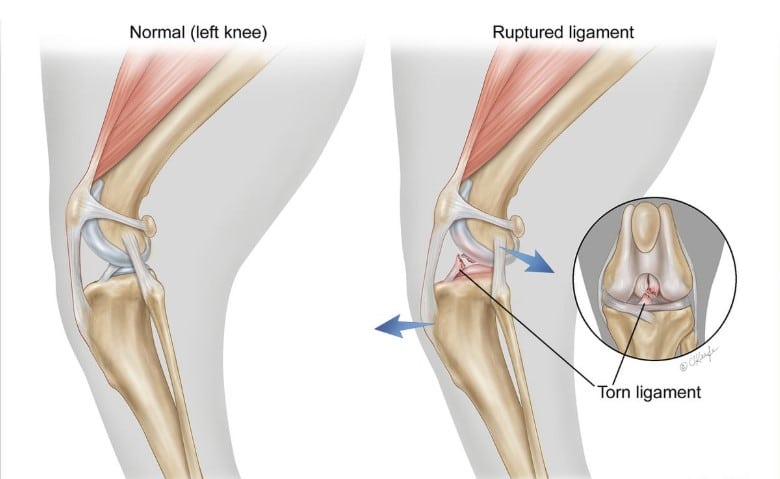
Canine Torn CCL (ACL): Causes, Symptoms, Diagnosis, and Treatment Options
A canine torn CCL – also frequently and mistakenly called a dog ACL tear – is one of the most painful and common orthopedic injuries in dogs. The accurate veterinary term is cranial cruciate ligament rupture dog, and it results in knee (stifle) instability, lameness, pain, and quick arthritis. This kind of dog knee ligament injury leads to dog knee instability if the condition is ignored. Early diagnosis and appropriate dog torn CCL treatment are essential to regain freedom of movement and improve life quality.
Have an idea what a torn CCL dog is, be able to identify torn ACL in dogs symptoms, understand the reasons behind it, and know the best treatment options for dogs.
What is the CCL (ACL) in Dogs?
The cranial cruciate ligament (CCL) is the dog version of the human ACL. It:
- Stops the tibia (shin bone) from moving forward
- Keeps the knee from twisting
- Supports the stifle joint when walking and running
In case the CCL is torn – either partially or completely – the knee lacks mechanical stability, thus leading to dog knee instability and the gradual worsening of the joint.
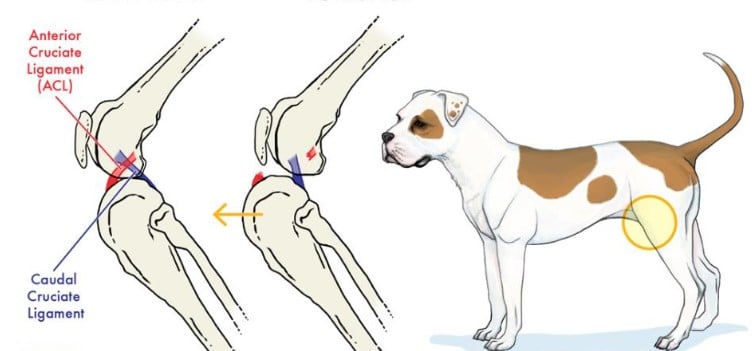
Is It an ACL or CCL Tear in Dogs?
Both terms are interchangeable, but:
- ACL = human term
- CCL = proper veterinary term
In dogs, the terms ACL tear and CCL rupture refer to the same injury. Whether you hear dog ACL tear or canine torn CCL, both mean a dog knee ligament injury by the cranial cruciate ligament.
Why Do Dogs Tear Their CCL?
Dogs typically don’t tear the CCL in a single sports injury like people do, according to the experts.
Most Common Causes
- Progressive ligament degeneration (most common)
- Genetics and breed predisposition
- Obesity
- Poor hind-limb conformation
- Sudden twisting or jumping
- Age-related weakening of the ligament
More often than not, the dog gets a cranial cruciate ligament rupture dog while going about his normal activities rather than by a major trauma incident.
Breeds at Higher Risk
- Labrador Retrievers
- Golden Retrievers
- German Shepherds
- Rottweilers
- Boxers
- Pit Bull-type dogs
In fact, any breed or mix can get a canine torn CCL; small dogs are not exempt.
Symptoms of a Torn CCL in Dogs
Recognizing torn ACL in dogs symptoms early can be one of the keys to better results.
Saden (Acute) Signs
- Sudden hind-leg lameness
- Non-weight-bearing or toe-touching gait
- Knee swelling
- Pain when rising or walking
Chronic or Partial Tear Signs
- Intermittent lameness
- Stiffness after rest
- Difficulty climbing stairs or jumping
- Sitting with the affected leg extended
- Muscle loss in the thigh
A dog knee ligament injury, if left untreated, generally deteriorates gradually.
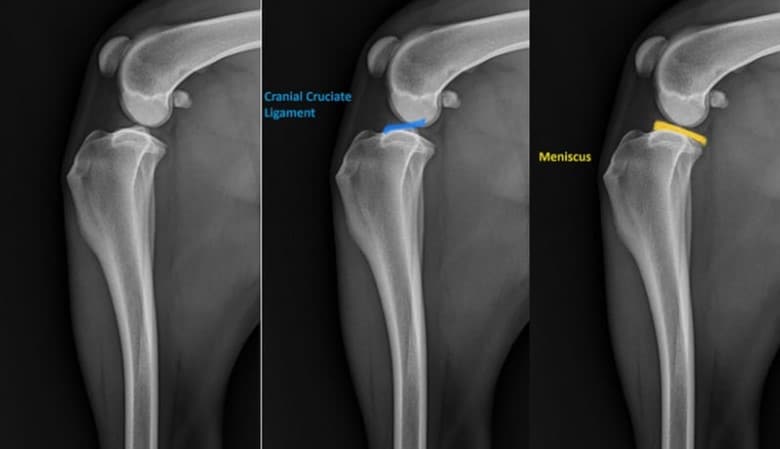
How a Torn CCL Is Diagnosed
Doctor vet diagnosis of a cranial cruciate ligament rupture dog usually includes:
- Orthopedic exam (drawer sign, tibial thrust)
- Evaluation under sedation (often needed)
- X-rays (to evaluate swelling and arthritis)
- Sometimes, advanced imaging or referral
X-rays do not depict the ligament directly but help identify joint instability and arthritis, which are typical of dog knee instability.
Why Early Treatment Matters
A torn CCL can speed up joint damage if not fixed right away. The instability from the tear lets the knee bones shift oddly when moving. This shifting harms the cartilage and meniscus inside the joint.
The thing is, meniscal injuries often show up when CCL damage goes untreated. They add more pain and swelling to the situation. Dogs with these issues may keep limping and move more slowly than normal.
It seems early diagnosis helps cut pain and stops long-term joint harm. With correct care, many dogs go back to doing regular things after healing. Hard to ignore how this affects daily life.
Treatment Options for Canine CCL Tears
Non-Surgical (Conservative) Management
May be a viable option for:
- Small dogs (<10-15 Kg)
- Very inactive dogs
- Partial tears (very rare)
Includes:
- Complete restriction of activity
- Weight loss
- Medications for pain and anti-inflammation
- Physical rehab
Conservative treatment of a dog ACL tear usually results in ongoing instability and arthritis, particularly in large dogs.
Surgical Treatment (Gold Standard)
Most canine torn CCL cases require surgery as the best long-term remedy. CCL surgery dog techniques help to stabilize joints and limit further damage.
Typical Surgical Procedures
TPLO (Tibial Plateau Leveling Osteotomy)
- Most suitable for medium and large, very active dogs
- Great joint stability and use of function in the long term
TTA (Tibial Tuberosity Advancement)
- Changes the knee’s biomechanics
- Works well in accurately chosen cases
TightRope/Extracapsular Repair
- Minimal invasive
- Small to medium-sized dogs are most suitable
Your vet or orthopedic surgeon would suggest the best CCL surgery dog option.
What Happens If a Torn CCL Is Not Treated?
Untreated cranial cruciate ligament rupture dog cases leads to:
- Chronic pain
- Progressive arthritis
- Meniscal tears
- Muscle wasting
- Reduced quality of life
Dogs may compensate temporarily, but the knee never really heals completely without treatment.
Recovery After CCL Surgery
Typical Recovery Timeline
- Hospitalization: 1-2 days
- Strict rest: first 2 weeks
- Controlled exercise: weeks 3-8
- Return to normal activity: 8-12 weeks
Physical rehabilitation after CCL surgery in dogs has a major impact on the final results.
Long-Term Prognosis
With proper care:
- 85-95% of pets get back from good to excellent limb function
- Most get back to walking, hiking, playing
- Arthritis progression is only slightly slowed (not totally stopped)
A dog ACL tear treated early yields the most favorable outcome
Will the Other Knee Tear?
It is quite common.
- 40-60% of dogs suffer from the opposite CCL rupture within 1-2 years
- Keeping weight and muscle strength may help to lower the risk
Dog owners should be alert for indications of dog knee instability in the other leg.
Preventing Future Knee Injuries in Dogs
Although not all CCL injuries can be prevented, several things can be done to prevent future knee injuries in dogs.
Maintain a Healthy Weight
Keeping your dog at an ideal weight can go a long way in preventing injuries.
Provide Regular Low-Impact Exercises
Low-impact exercises can go a long way in building strong muscles that support your joints.
Avoid Sudden High-Impact Activity
Before engaging your dog in any form of physical activity, it is advisable to warm up your dog to prevent injuries.
Joint Health Supplements
Some veterinarians recommend giving your dog joint health supplements that contain ingredients like glucosamine, chondroitin, and omega fatty acids.
Regular Veterinary Checkups
Regular checkups with your veterinarian can go a long way in identifying early signs of joint injuries before they develop into more serious injuries.
When to See a Vet
You should take your dog to the vet:
- Stops suddenly using a hind leg
- Cries out in pain when running and jumping
- Get a knee swelling
- Develop continuous or worsening lameness
If you suspect your dog knee ligament injury or a torn ACL in dogs symptoms, a prompt evaluation by a trusted veterinary provider like AV Veterinary Center can help safeguard your dog’s long-term joint health.
Canine Torn CCL Is Treatable
A canine torn CCL (dog ACL tear) is painful – but very treatable. With proper diagnosis, the right surgical or medical management, and dedicated rehabilitation, most dogs get back their comfort, stability, and an active lifestyle.
If your pet exhibits signs of dog knee instability or a cranial cruciate ligament rupture dog, don’t delay – early veterinary evaluation from AV Veterinary Center ensures long-term joint health.