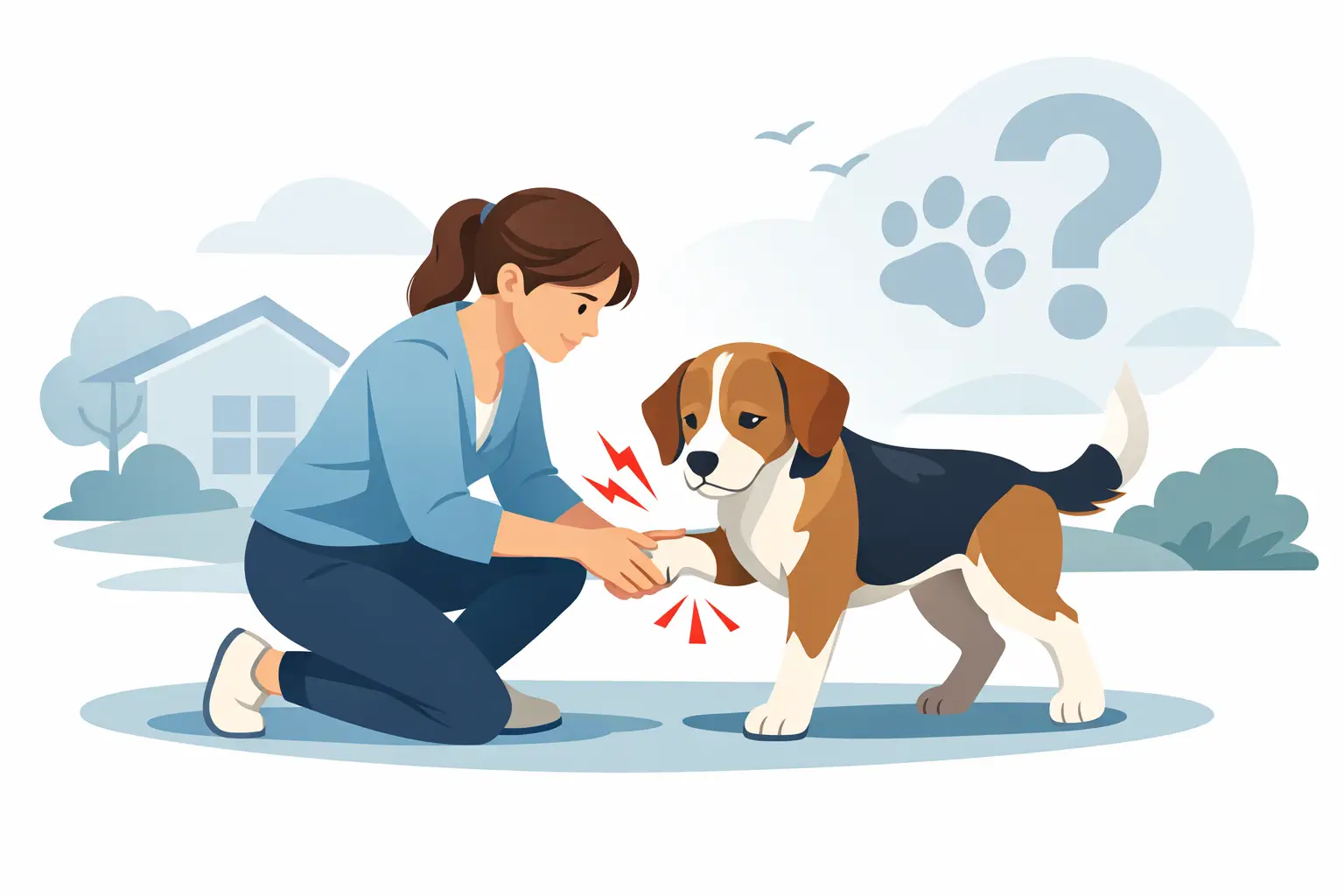
The Unseen Injury: Why Your Dog’s CCL Tore (and Which Breeds are at Higher Risk) – If your dog abruptly starts limping after playing in a Santa Clarita park, it’s only natural that you’d think the dog must have had a fall or rough landing. Usually, pet owners blame a single, very visible incident for a torn Cranial Cruciate Ligament (CCL). However, more often than not, that last “pop” is just the end of the story. In fact, the major part of many dog knee issues remains unseen and occurs gradually, which is the reason why knowing the causes of your dog’s CCL tear and identifying the breeds at higher risk through knowledge and understanding is the pathway to being a responsible pet owner.
Actually, most of the time CCL tears happen not as a result of a single accident but are the final breakdown of a ligament that has been slowly weakening over a period of time. Understanding the root causes of this common orthopedic condition will enable you to keep your dog safe and spot the signs before it’s too late.
“Veterinary research shows that degenerative changes in the cranial cruciate ligament occur well before the dog starts to limp. By the time the ligament tears, it might have been weakened to a great extent.”
The Slow Fade: Why Most CCLs Break Down Over Time
Think of your dog’s CCL like old rope, slowly wearing thin. This isn’t a sudden snap – it is a slow breakdown, called Cranial Cruciate Ligament Disease. So the ligament fibers weaken bit by bit, not overnight.
A sudden jump or quick twist? That’s not usually what breaks it. It’s more like the final push that makes a weak ligament snap. Several things add up to this slow tear.
1. Body Shape
How your dog’s legs are built matters a lot. Many have a steep slope on their shin bone, the tibial plateau.
That angle puts extra pressure on the knee when they walk or run. Over time, that pressure makes the ligament weaker. Steeper slopes mean more risk for damage.
2. Genes
Family history plays a big part in how likely a dog is to get this problem. It seems like some dogs just pass it on. Sometimes, a dog’s weakness in ligament structure or knee anatomy can be an inherited trait that simply induces more stress on the joints.
This is the reason veterinarians often find cruciate ligament injuries in certain breeds. In case your dog’s relatives or parents had joint issues, it is likely that your dog could develop such problems too.
3. Obesity
One of the most ignored factors of joint health in dogs is weight control. Extra body weight greatly raises the knee joint stress, especially on the CCL.
An extra few pounds are enough to increase the pressure on your dog’s ligament with every movement. As time passes, this continual stress can lead to ligament deterioration and a higher probability of tearing.
Keeping your dog at a healthy weight is definitely one of the best ways to lessen joint stress and ensure your dog’s ability to move around.
Could Your Dog’s Breed Be More at Risk?
Although any dog is at risk of having CCL injury, studies have identified a number of breeds that, through their genes, have a predisposition for cruciate ligament disease. If your dog is from one of these breeds, focusing on joint care and being preventive is highly important. Besides, large active dogs or those with certain skeletal structures are particularly susceptible to these issues.
- Rottweiler
- Labrador Retriever
- Newfoundland
- Golden Retriever
- German Shepherd
- Bichon Frise
- Staffordshire Terrier
The fact that dogs of these breeds are more susceptible to CCL injuries does not mean that all of them will inevitably be affected. It simply indicates that owners of these dogs should be giving extra attention to their dogs’ joint health, weight management, and adequate exercise.
Signs of a CCL Injury in Dogs
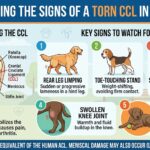
It might be quite helpful to catch the symptoms at the earliest stage before the damage gets aggravated. Here are some of the signs that can alert you to an issue:
- Sudden limping in a back leg
- Difficulty standing or jumping
- Stiffness after exercise
- Sitting with one leg stretched to the side
- Less activity or reluctance to run
At first, the symptoms may be very mild and not constant, but later on, the injury will progress to a complete rupture of the ligament.
Protection of the Dog’s Joint Health
Even though you cannot alter your pet’s genetics or the way their body is built, pet owners can still implement some precautions to lower the likelihood of CCL injuries.
- Keeping your dog in a slim physique reduces the load on its joints significantly.
- Activities like walking and swimming help keep the muscles strong without putting too much pressure on the joints.
- Veterinarians often recommend joint supplements such as glucosamine and omega-3 fatty acids for a dog’s joint health.
- Veterinarians can diagnose signs of joint instability or arthritis very early during a regular examination.
Conclusion
It is very rare that a single accident causes a CCL tear. Usually, several factors such as genetics, conformation, weight, and long-term wear of the ligament contribute to it. The knowledge of these factors will help pet owners to prevent and detect diseases early. If your dog is a breed that is at a high risk or showing signs of knee discomfort, visit your veterinarian to discuss a joint health plan that is ready to help.
FAQs
What is the cranial cruciate ligament (CCL) in dogs?
The CCL is a ligament located in a dog’s knee that is responsible for stabilizing the joint and preventing the shin bone from sliding forward. It is the equivalent of the ACL in humans.
What causes a CCL tear in dogs?
The majority of CCL tears happen because of the ligament wearing down gradually over time, which can be influenced by factors such as genetics, joint structure, obesity, and repetitive stress. Very rarely, a single injury is responsible.
Which dogs get CCL tears most often?
Labradors, Rottweilers, Goldens, Shepherds, and Staffordshire tend to have more issues because of genes and how their bodies are built.
Can a CCL tear heal without surgery?
Some small tears might improve with rest, light activity, and joint support, but big ones usually need surgery to fix the knee.
How can I stop my dog from tearing the CCL?
Keeping them at a healthy weight, giving smart exercise, boosting joint health, and checking in with the vet regularly helps a lot.