You may have seen your pet’s difficulty in rising from their bed or seen your cat refuse to jump as they used to. It can be challenging to see a pet suffering without being able to communicate with them; thus, it can be difficult to determine how long your pet has been experiencing pain until they show signs of injury. Most pet owners do not realize how prevalent orthopedic conditions (e.g., joint/ligament injuries, hip dysplasia, etc.) are among dogs and cats; however, advances in veterinary orthopedic surgery have changed this situation significantly since the days when only humans were treated surgically for these types of injuries. Through today’s modern technologies and advanced techniques being used on a daily basis by veterinarians, there are now many opportunities for pets who would not have otherwise been eligible for treatment because of the length of time that has gone by since their injury.
Here, we know about how orthopedic surgery can restore your pet’s mobility. So, stay tuned for this blog.
What Is Veterinary Orthopedic Surgery?
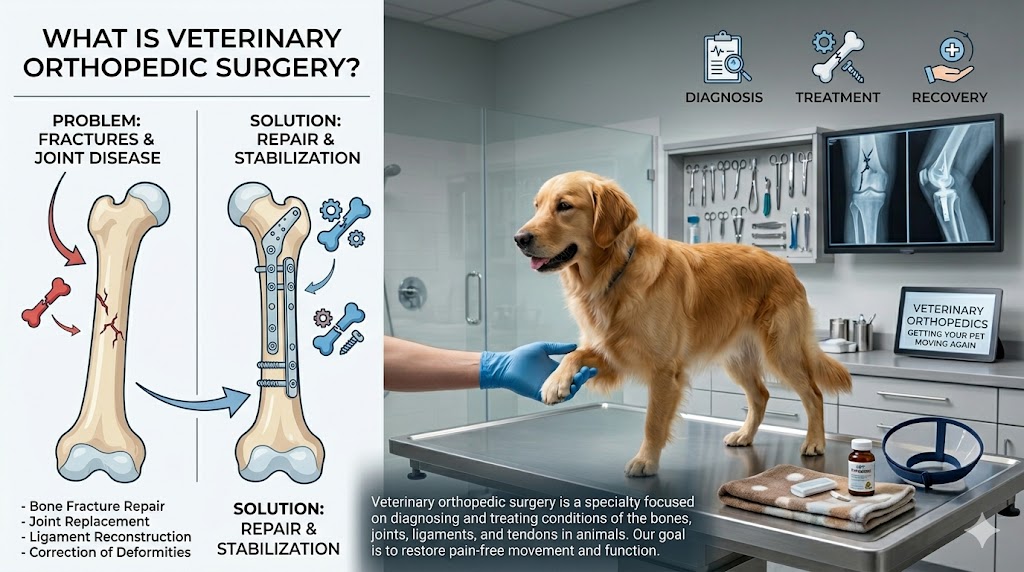
Veterinary orthopedic surgery is focused on diagnosing and treating conditions affecting the bones, joints, ligaments, tendons, and muscles of animals. Like human medicine, orthopedic procedures can be very simple or very complicated with the goal being to restore function, provide pain relief and improve an animal’s quality of life.
Not just limited to dogs and cats, rabbits and birds and any other exotic animal can have an orthopedic procedure performed if necessary.
Common Conditions That Require Orthopedic Surgery
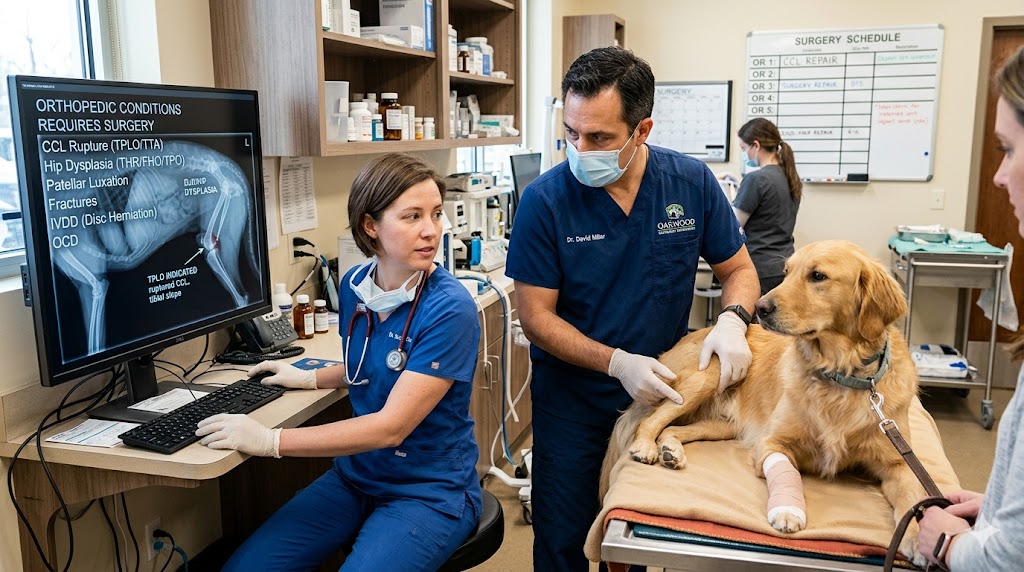
1. Cruciate Ligament Tears (CCL/ACL Injuries)
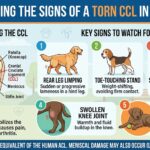
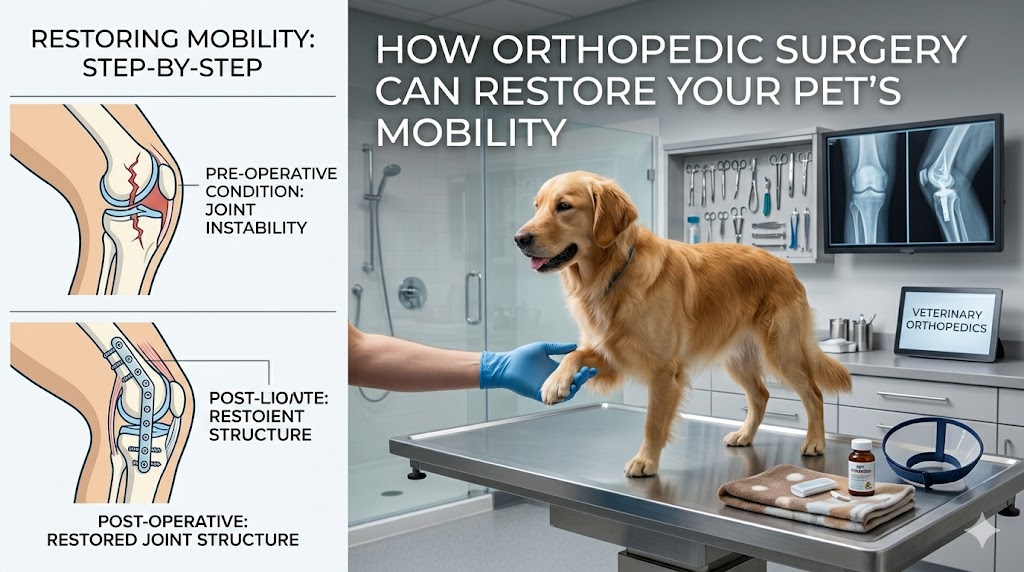
A torn cranial cruciate ligament (CCL) is one of the most common canine orthopaedic injuries. This injury results in sudden lameness when the dog’s knee has suddenly become unstable due to the unpairing of the femur and tibia bones; the result is also that over time, the affected leg will become more and more arthritic without surgery/an intervention. Currently, TPLO (Tibial Plateau Leveling Osteotomy) and TTA (Tibial Tuberosity Advancement) are the two most effective surgical procedures used to; stabilize the dog’s knee and to get the dog weight-bearing again.
2. Hip Dysplasia
Hip dysplasia is a condition in which the hip joint is maldeveloped and as a result, there is pain and instability due to the bones grinding against each other. Surgical procedures such as total hip replacements (THR) and femoral head ostectomies (FHO) are very successful in eliminating pain and providing better mobility, especially in those large breed dogs that are genetically predisposed to developing the condition.
3. Fractures and Broken Bones
Injuries caused by accidents, falls or a collision can lead to the need for surgical repair. By using plates, pins, screws or external fixators to properly immobilise and stabilise the fractured bone, it is more likely that the bone will heal correctly, allowing normal function long-term. If the fractured bone is not properly fixed during the healing process, it may lead to permanent problems in moving.
4. Luxating Patella
Dogs, especially smaller breeds and cats, may have a luxating patella (sliding kneecap), meaning the kneecap is not in the correct position. If the problem is mild, physiotherapy is usually enough treatment. In cases that are moderate to severe in severity, surgery can be performed to correct the alignment of the kneecap, preventing any further damage to the joint later.
5. Elbow Dysplasia
Elbow dysplasia is an abnormal development of the elbow joint in many large and giant breed dogs. Surgery frequently involves removal of bone chips, smoothing the surfaces of the bones that form the joint, and slowing down the progression of arthritis through surgical correction of the abnormality.
What Does Recovery Look Like?
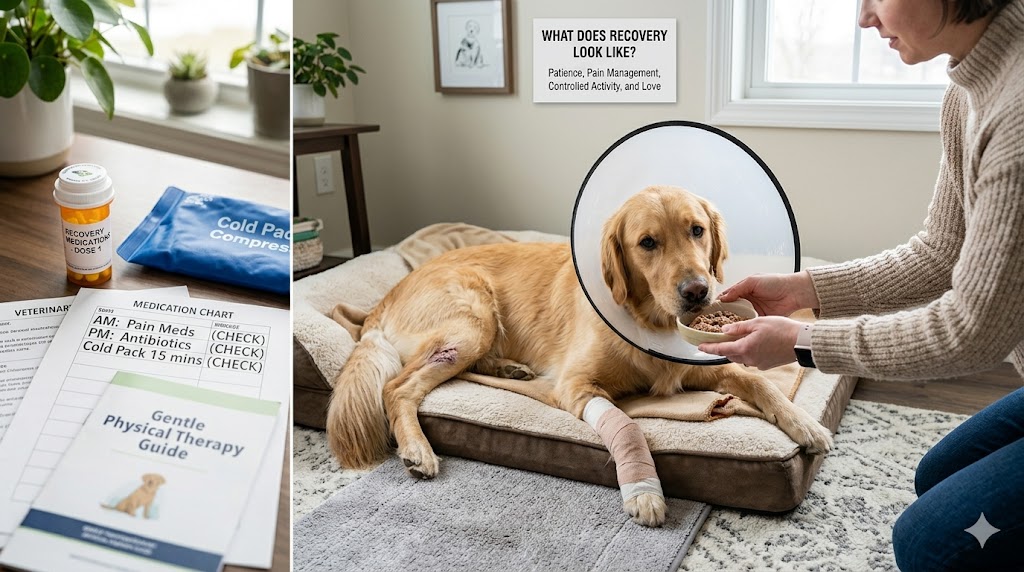
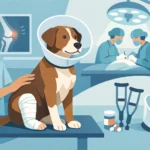
How long it will take for your pet to get over an orthopedic operation can be affected by many things including age/weight/health/ type of surgical procedure, but generally dogs will start to feel better after just several weeks. The following is a brief summary of what you can expect after surgery:
- Initial weeks of rest/restriction of movement while healing occurs
- Pain control via the use of pain medications prescribed by your veterinarian
- All breeds of dogs are considered in good physical condition after surgery, and range in fitness level, so they must participate in our physical rehabilitation and aquatic therapies
- Regularly schedule follow up appointments to assess the level of recovery throughout the healing process using physical exams and radiographs
- Gradual re-engagement into regular activities over weeks to months
It is critical that you follow your veterinarian’s post-operative recovery recommendations as closely as possible. If you try to get your dog back up to full speed too quickly or allow excessive amounts of activity before it is safe to do so, you risk jeopardizing the integrity of the repair and could lead to a complication.
Is Orthopedic Surgery Right for Your Pet?
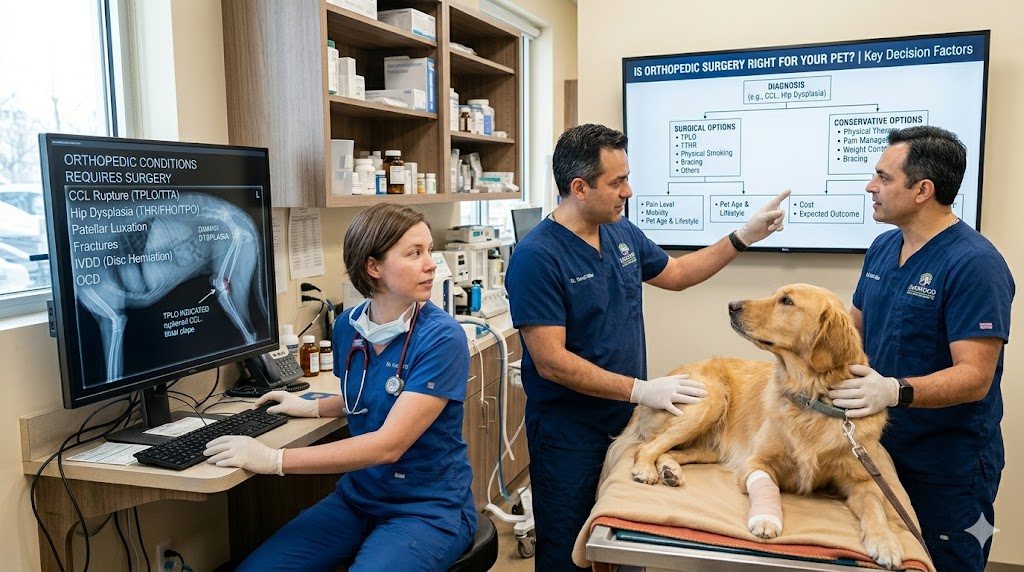
There are many limping pets that do not require surgery. An extensive physical exam will be performed, history will be obtained, and usually radiographs or CT scans will be recommended before a surgical recommendation is made. A surgical recommendation is usually made for the following reasons:
- It has failed after conservative/rehabilitation with medical treatment, and/or physical therapy.
- Affecting the quality of life of the pet significantly.
- Injury or disease due to injury if not intervened in, will worsen.
- The animal is healthy enough to have anesthesia for surgery
- Age is not a limitation for having surgery.
Many senior limping dogs continue to function well after orthopedic surgery and have a significantly improved quality of life after surgery.
Signs Your Pet May Need an Orthopedic Assessment
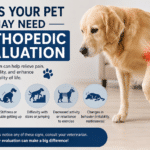
Watch for the following signs of dog pain:
- Limping or favouring one leg
- Refusal to climb stairs, jump or exercise
- Stiffness after resting, especially in the morning
- Swelling around a joint
- Yelping/flinching when the dog is touched on a certain part of their body
- Loss of muscle in one limb compared to the other limb
If you see any of these signs regularly, talk to your veterinarian instead of waiting for them to go away on their own.
Conclusion
Watching your pet become unable to move is a heart-wrenching experience; however, orthopedic surgery has given many animals a chance to regain their ability to walk, jump, run and play, as well as live comfortably in their own bodies, through the experience of others. If you are concerned that your dog or cat may have a problem moving, it is very important to see a veterinarian as soon as possible, as early intervention makes all of the difference in how well your pet will recover. Our compassionate staff at AV Veterinary Center is committed to providing quality orthopedic care in order to assist your furry friend in returning to a normal lifestyle and to lead their best life.
FAQs
How do I know if my pet actually needs orthopedic surgery or just rest and medication?
Pet owners often worry about whether or not wounds will need surgery. However, a limp/stiffness may not necessarily indicate you need to have an operation performed. Your veterinarian will likely attempt conservative measures first (rest, anti-inflammatories and physiotherapy). Surgery may be appropriate if these options do not help, if an injury is worsening over time or if your veterinarian has seen evidence of structural abnormalities (as seen on X-rays) that require surgical correction. Your best option is to obtain a complete assessment as soon as possible instead of waiting to see if a problem resolves itself.
My pet is quite old — is orthopedic surgery still safe for them?
Many pet owners believe that older animals shouldn’t undergo surgery and therefore have made up their mind that surgery is not an option for their older pet. However, age alone does not prevent your pet from being a candidate for orthopedic surgery. What really matters is your pet’s overall health, which includes heart function, kidney function and the ability to tolerate surgery with anaesthesia safely. Your veterinarian will perform pre-surgical blood testing, a full health assessment and will then discuss whether or not your pet is a candidate for surgery. Many older canines and felines have had orthopedic surgery successfully and have experienced improved quality of life after surgery.
How long will my pet take to recover after orthopedic surgery?
The length of time it takes for a pet to recover from surgery will depend on the type of surgery performed, its size and/or weight or age, and their health status before surgery was performed. Most pet owners will notice that their dog can put some weight on a leg after about 2 weeks following surgery. However, dogs that have undergone surgery such as cruciate ligament repair will not return to full-blown/normal activity until between 3-6 months post-surgery. Therefore, your veterinarian will be there to help you through each phase of recovery as long as you don’t attempt to hurry the process along by not providing your pet with adequate rest and completing his/her physical therapy programs to ensure the best long-term recovery possible.
Will my pet be in a lot of pain after the surgery?
It is entirely normal to be concerned about this. The straightforward answer here is that there will likely be some pain and discomfort in the days immediately following surgery; however, your veterinarian should provide a custom-made pain management approach by sending you home with multiple types of medications, i.e., anti-inflammatories as well as pain medications. Also, most pets tend to do quite well the first week following surgery; just notify your veterinarian immediately should you think that your pet is behaving unusually uncomfortable, as if he/she isn’t eating or exhibiting any distress other than what your veterinarian has specified as “normal.”