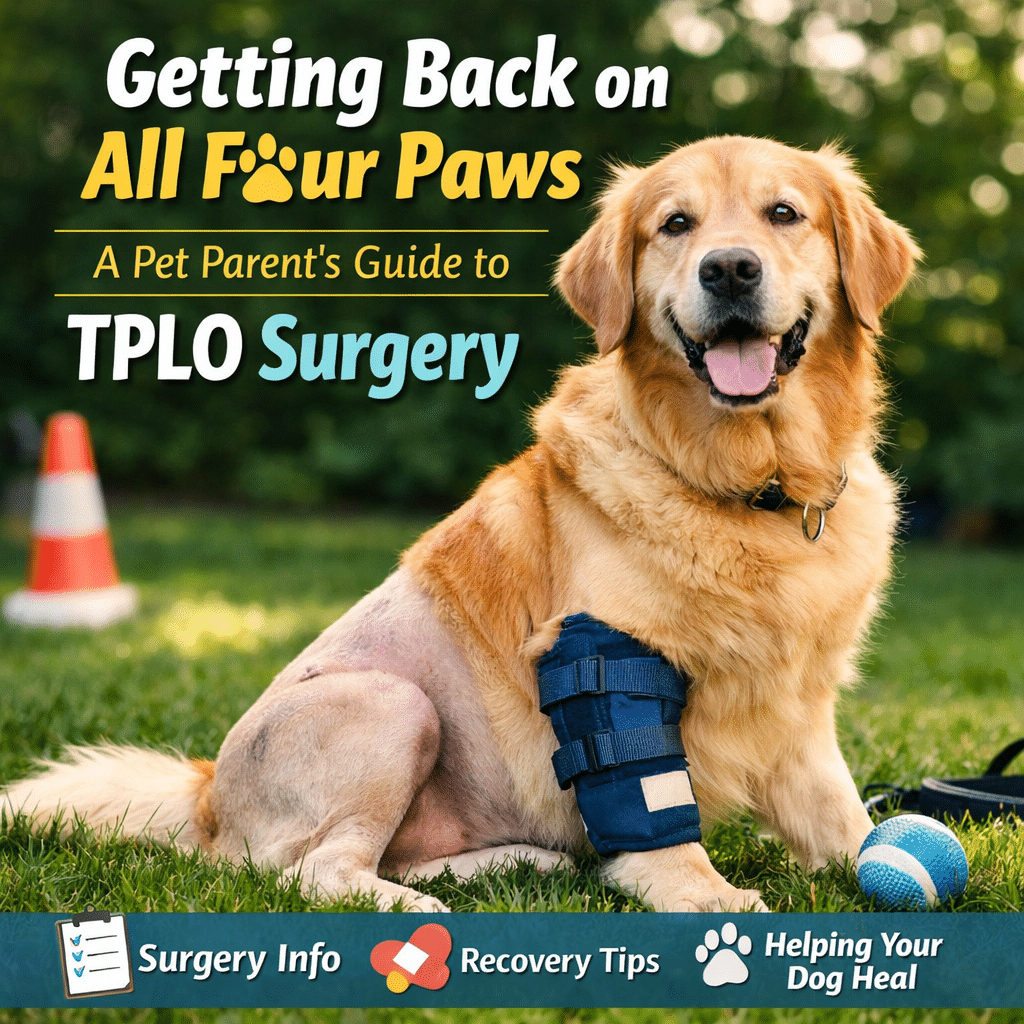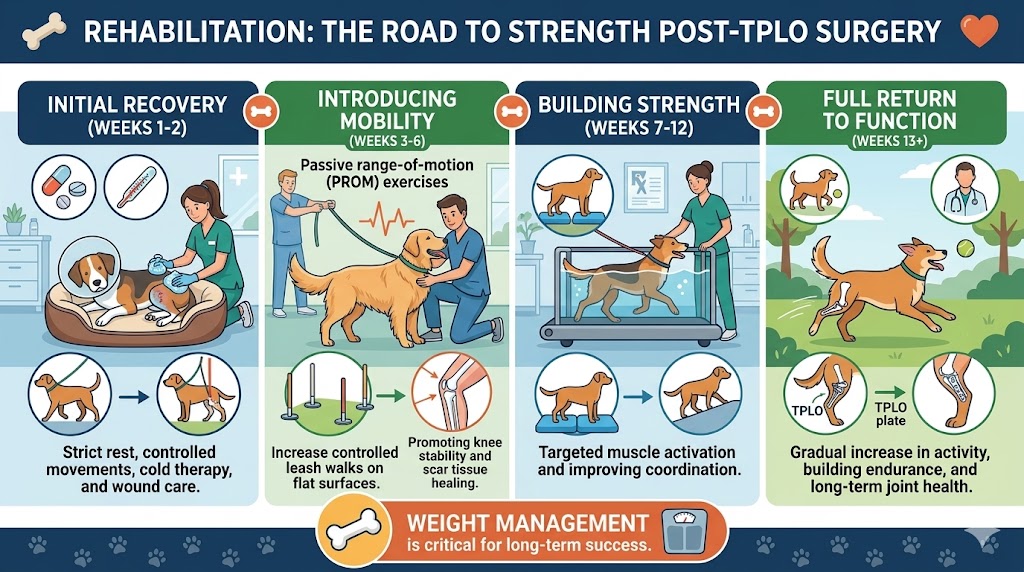
If your active dog has just received a diagnosis of needing TPLO (Tibial Plateau Leveling Osteotomy) surgery, you’re probably thinking of a ton of things right now. We know it’s stressful. You’re probably worried about the procedure; but somewhere in the back of your mind, all you can imagine is those big bright shiny eyes staring at you and asking you when they are going to be ready to retrieve and play with their favourite toy. This surgery represents a huge step forward, but getting back to those happy high-speed wagging tails doesn’t happen until the moment your dog wakes up off the table, after surgery. The road back from surgery is more of a marathon than a sprint; the “quiet time” and crate rest will feel like obstacles, but they’ll be the keys to a successful recovery. You should view these phases as working together (you, your surgeon, and your dog’s awesome ability to recover).
So, here in this blog, we explore rehabilitation: the road to strength post TPLO surgery.
Understanding the “Why” Behind Rehabilitation
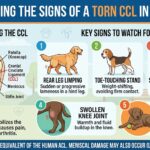
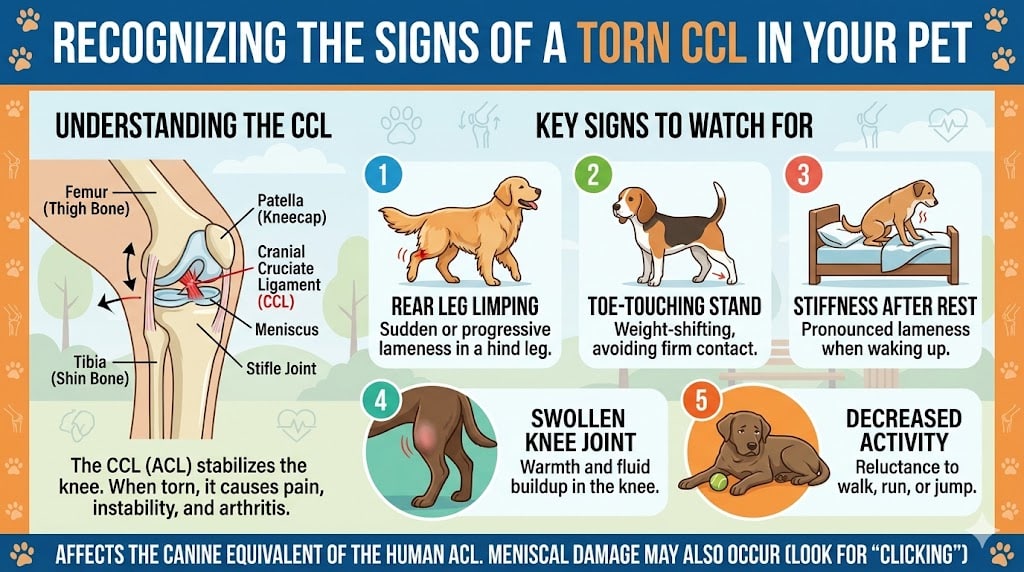
When a dog’s Cranial Cruciate Ligament (CCL) tears, it causes the knee to become unstable. The TPLO procedure changes how the knee functions so that the ligament is no longer required but it is only part of the solution.
Think of the TPLO surgery as putting in a new foundation for a home. It stabilizes the house but the rehabilitation program provides for building the frame and walls of the house. The bones need to heal but the muscles that support the knee will weaken as they are not used during the time the dog is healing from the surgery (called muscle atrophy). A well-designed structured rehabilitation program will rebuild strength, restore the normal range of motion and return your dog to optimal function safely.
Without a structured rehabilitation program, a dog may heal but will develop secondary problems such as arthritis or tearing in the opposite knee because they tend to continue to favour the opposite leg. Rehabilitation allows the dog to be able to thrive; they won’t just be able to walk.
The Phases of Recovery: What to Expect
Recovery does not proceed in a straight line. It follows a number of milestones.
The Healing Window Phase (Weeks 1 to 8)
In this phase, the bone creates new solid tissue surrounding the new hardware (plate and/or screws). Your role is that of the Chief Cuddle Officer and strict Leash Law Enforcer. Controlled motions will protect the operative site from being stressed prior to the bone becoming strong enough to handle these stresses.
Phase 2: The Muscle Rebuilding Phase (Weeks 8 – 16)
Once you have completed the first 8-10 weeks of healing, we will guide you through a gradual return to activity with the emphasis on physical therapy. Physical therapy will play an important role in all aspects of your recovery.
A structured rehabilitation program will reduce the likelihood of re-injury, help manage scar tissue during your healing period — and accelerate your return to an active and happy way of life.
At this point in your rehabilitation process, we will be moving away from “restricting movement” to “optimizing movement.”
We will also be monitoring your muscle mass returning to your thigh so that you can walk without a limp at this time.
The Professional Toolkit: Formal Physical Therapy
Formal physical therapy can benefit many dogs that are recovering from an injury and help them get back to full function. Some common types of therapies are:
- Underwater Treadmill – The underwater treadmill is one of the best types of rehabilitation devices because it provides a weightless environment for your dog to exercise in. The water also gives your dog resistance to use for building muscles and retraining their gait. Many dogs that love to swim think this is their favorite therapy of the week!
- Laser therapy – This type of treatment is safe, painless, and will help your dog with pain relief, decrease inflammation, and speed up their recovery. In addition, it will help reduce your dog’s long-term need for pain medication.
- Therapeutic Exercises – A rehabilitation specialist can develop an exercise plan focused on helping your dog regain balance, flexibility, and core strength. Most therapeutic exercise programs start with some simple passive range-of-motion activities and progress to more active strengthening activities. You might see your dog doing “doggy squats” or balancing on special foam pads to develop their little stabilizer muscles.
Home Care: Your Role in the Recovery
While professional sessions are important, it is your work at home that will keep the momentum going. The key to success is consistency.
- Passive Range of Motion: Gentle flexion and extension of the joint (as instructed by your veterinarian) allows your dog’s knee to avoid becoming stiff or locking in place because of scar tissue.
- Controlled Leash Walking: No “zoomies”! Slow, intentional walks will encourage your dog to actually use the surgical leg to bear weight, not to hop around.
- Ice and Heat: Use ice in the early stages to assist with reducing swelling. Later, use moist heat prior to your daily exercise to help loosen the muscles.
Pro Tip: Keep a “Recovery Journal.” Progress from day to day may not be obvious, but when reviewing week 2 versus week 6, you will be shocked by the progress you have made with your furry friend.
Why “Good Enough” Isn’t Enough
You may want to quit doing your dog’s rehab exercises when your dog quits limping. However, as you may know, “not limping” does not necessarily mean “strong”. If the muscle is not fully back to where it was before the injury occurred, the joint is still at risk.
There may be a significant amount of time and money invested in post-operative rehabilitation so that your dog has the absolute best chance at regaining athletic ability and will be able to live a long, healthy life as a direct result of the surgery you had done on your dog. In addition to protecting the investment you made in the surgery for your dog is protecting your dog’s quality of life as it grows older.
Conclusion
While it may feel like it takes a lot of time for your dog to heal after TPLO, the journey is laid out in front of you to be taken all the way to the end: to regain your dog’s full and active life, free from pain. After this successful surgery, by being committed and consistent in the rehabilitation of your dog (through physical therapy and crate rest), you will have given your dog the gift of mobility. Watching your dog run confidently and in balance on leash, with joy, will make all the time spent in a crate and at rehab worth it.
The team at AV Veterinary Center is here to provide you with a customized plan of care and to help you navigate each step of your dog’s healing experience after TPLO. Our goal is to treat the entire dog so that they will have successful surgery, take a lot of hard work and effort to recover, and when they return home after recovering from their injury, they will come back stronger than when they had TPLO.
FAQs
My dog seems ready to run after only two weeks. Can I let them off the leash?
In summary: It is not worth taking the chance! It may be very tempting, but these dogs are most at risk for re-injury when they are being given “I am bored” looks – a very dangerous time for these dogs and their owners. The reason dogs do not appear to be limping is that their bones have not completely healed; they are essentially depending upon the metal implant for stability and support. If a dog is jumping or twisting around, he could potentially re-injure his bone or the other knee. Please follow the leash law until your surgeon clears you to allow your dog to run free, typically around 8 weeks after surgery.
Is the underwater treadmill really necessary, or just a “luxury”?
Consider the underwater treadmill as a method of treatment for your canine athletic needs, similar to a superhuman treatment to receive while recovering from an injury. The weightlessness your dog will experience by being supported by the water level will allow them to engage in movement and exercise, including any joint-related problems without their entire body weight making contact with the ground (thus causing impact-related pain).
Users who use the underwater treadmill claim it is one of a limited number of return-to-sports methods to use for rehabilitation following injury. If your dog does not participate in formal rehabilitation services, he/she will walk on that leg, but will probably develop diminutive (chicken) leg muscle loss on that leg until his/her next visit to your veterinary surgeon, which places that leg at risk of degenerative arthritis from no longer having normal muscular size.
What exactly is “Laser Therapy”? Does it hurt?
Not really. In reality, many dogs will get sleepy during a session as the sensation of using the laser is similar to receiving a warm and comforting massage. The laser works by utilizing light energy to penetrate into the body’s cells, stimulating the cells to reduce inflammation and heal tissues more quickly. Thus, this method of relieving pain allows you to avoid using heavy sedatives which can also cause stomach upset in dogs.
My dog is “bunny hopping” on walks. Is the surgery failing?
In the beginning, “bunny hopping” or skipping will happen with the dog often. This is mostly a habitual movement because they have experienced a lot of pain and muscle stiffness due to their procedure. If your dog’s skipping increases or suddenly there is no weight on the affected leg and weight was being applied to the leg and the dog was walking well, contact us immediately regarding any changes. That’s also why therapeutic exercise is so important, as it helps to reacquaint the brain with the use of both legs independently of each other.