Fractures in Pets: Surgery vs Natural Healing – What’s Better?
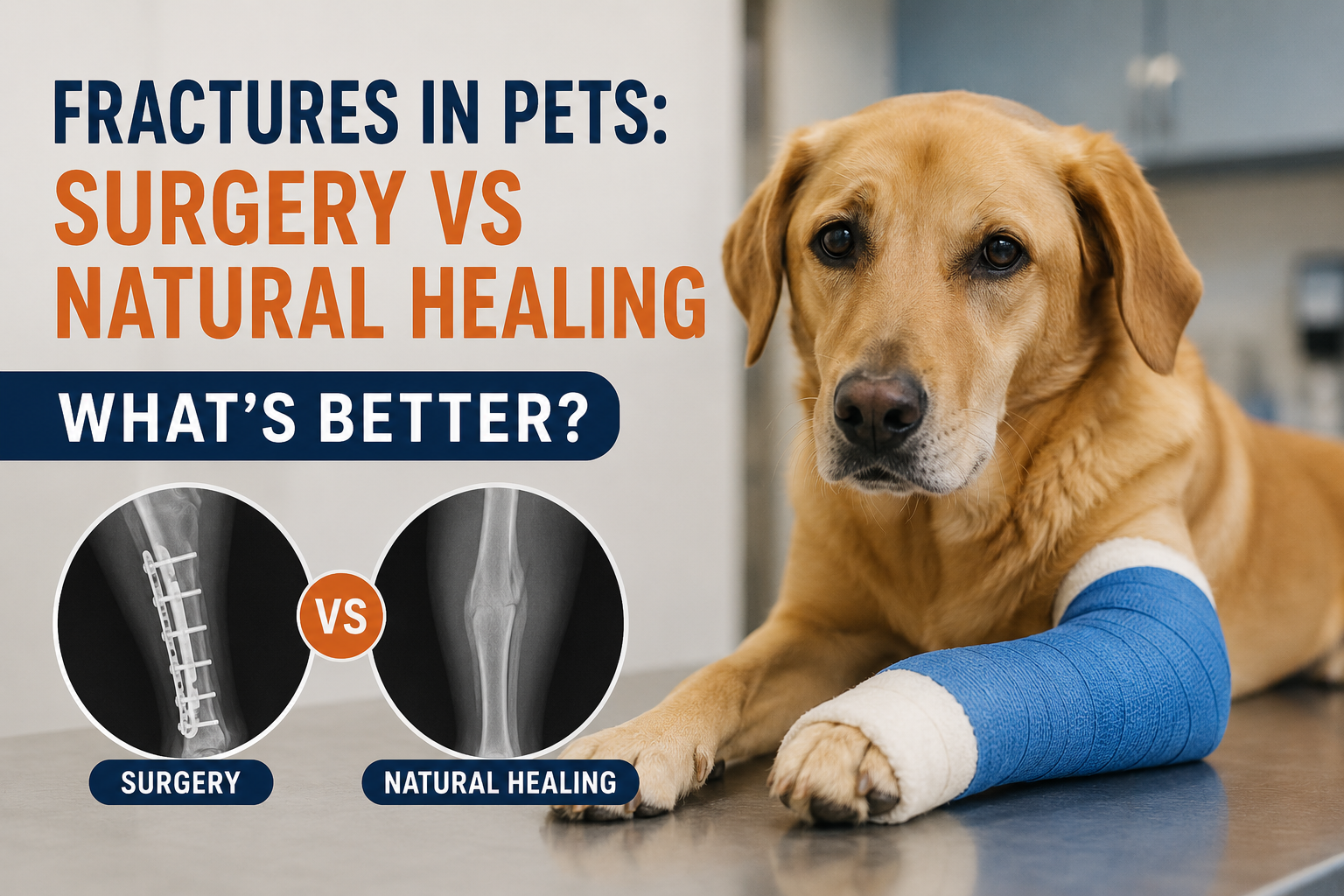
Fractures in Pets: Surgery vs Natural Healing – What’s Better? – Fractures in pets are common but serious health issues that require immediate care. Fractures in Pets: Surgery vs Natural Healing – What’s Better? is a common dilemma faced by pet owners after their dog or cat suffers a broken bone. Even though a few fractures can heal on their own if the situation is taken care of properly, in many cases, surgery would be the best option to have the bones fixed and healthy again. Understanding the pros and cons of these treatment methods will help you choose the best option for your pet’s health and mobility.
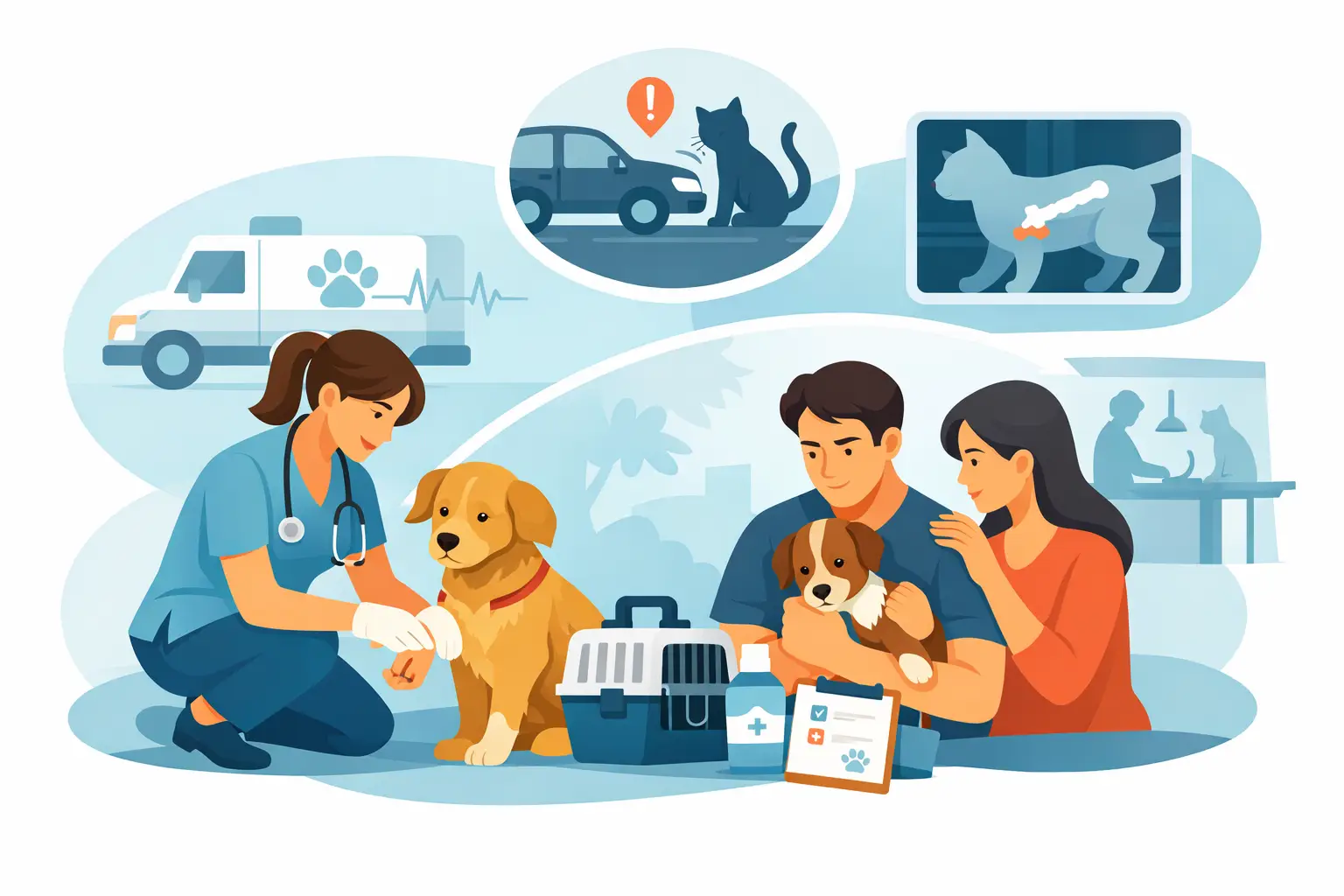
A fracture is a break or a crack that occurs in a bone, usually as a result of some kind of force or impact, like a fall, an accident, or a fight. Most pets with fractures show symptoms such as limping, swelling, visible pain, and an inability to bear weight. Fractures can be classified as:
Simple (one break)
Complex (several fragments)
Open (bone sticks out)
Closed (no external wound)
Diagnosis of fractures is not possible without taking the help of X-rays or other types of imaging, which also help in deciding about the seriousness of the condition and the method of treatment.
Natural Healing (Non-Surgical Treatment)
Natural healing refers to stabilizing the fracture using casts, splints, or strict rest without surgery.
When Natural Healing Works
Natural healing may be considered in the following cases:
When it is a minor fracture or one that is stable
When the pet is young and in good condition
If the bones are already in the right position
When the injury does not affect the major bones that carry the weight
Veterinary specialists believe that a number of incomplete fractures in young animals may even heal well, supported by external aids such as splints or casts.
Benefits of Natural Healing
It ensures the pet avoids the anesthetic and surgical risks
Usually costs less
May be a good option for minor fractures
Drawbacks of Natural Healing
Takes more time to heal
There is a risk that the bone will be set incorrectly (malunion)
Strict confinement and regular check-ups are necessary
Excessive movement increases the risk of complications such as non-union
Surgery for Pet Fractures
Surgery stabilizes the bone using plates, screws, pins, or external fixators.
Healing is typically sped up and, in most cases, more effective and predictable
Appearance and function are less likely to be compromised
Movements, though controlled, can begin at an earlier stage
Disadvantages of Surgery
It is more expensive
There is a possibility of an infection or other problems arising from the implant.
General anesthesia and surgical recovery are necessary
Surgery vs Natural Healing: Main Points
Factor
Natural Healing
Surgery
Stability
Less controlled
Highly stable
Healing Time
Longer
Faster
Cost
Lower
Higher
Risk of Complications
Higher (malunion, non-union)
Lower (if done correctly)
Suitable cases
Minor fractures
Complex fractures
Which Option Do Veterinarians Suggest?
“The key to bone healing is that the pieces have to be immobilized.”
Veterinarians point out that the main thing is keeping the bone stable. Surgery can give more stability most of the time. That is why it is often the preferred treatment for severe fractures. On the other hand, when there is a small injury, a non-surgical approach can still give results very close to surgery if the management is right.
Factors that Influence the Best Treatment
The choice between surgery and natural healing depends on:
Type of Fracture
If the fracture is complicated, then surgery is almost certainly needed.
Age of the Pet
Since young animals regenerate their tissues faster, they are more amenable to non-surgical methods.
Location of the Injury
If the fracture affects a weight-bearing bone, surgery is usually required.
Overall Health
A sick or old animal may require a very different approach to treatment.
Owner Commitment
Options such as not having surgery mean that the animal will need to be kept very quiet, and also, owners must regularly bring the animal to the vet for examinations.
Recovery and Aftercare
No matter which method is chosen for treatment, the healing process is extremely important.
Typically, healing may take 4-12 weeks, depending on the severity
Strict activity restriction is important
Follow-up X-rays monitor healing progress
Physiotherapy may help restore mobility
Good care after the initial treatment is what leads to the best results and lowers the number of complications.
Conclusion
The question, Fractures in pets: surgery vs natural healing – which one is better, does not have a one-size-fits-all answer. It depends on the type of fracture, the state of the pet, and the vet’s opinion. Surgery is more exact and dependable; however, natural healing can be effective in less serious cases.
If you want expert care and personalized treatment plans, visit AV Veterinary Center. It is a reputable veterinary hospital that is committed to promoting your pet’s good health and facilitating their recovery.
FAQs
Can a pet’s fracture heal without surgery?
Yes, minor and stable fractures can heal naturally with casts or splints, particularly in young animals.
Is surgery always better for pet fractures?
Not necessarily. Surgery is a must for complicated fractures. However, simple fractures may be able to heal without surgery just fine.
How long does it take for a pet’s fracture to heal?
Depending on the severity and the treatment. Most fractures heal within 4-12 weeks.
What happens if a fracture is not treated properly?
Improper treatment may result in misaligned healing, non-healing, long-lasting pain, or loss of function.
Is surgery risky for pets?
In general, surgery is quite safe, but it does have risks like infection or problems with the implants. However, these are fairly rare when the operation is done properly.