As a pet owner, you know that your animal cannot express to you that they are having an internal medical emergency. One minute your pet appears to be healthy & happy, the next they are lethargic, whining, or not eating at all. This can be upsetting, especially if they seem like a different animal in such a short time-frame. Unfortunately, many internal medical issues in pets can develop very quickly and the difference between recovery and a response to a critical condition could be as little as an hour to seek help. Therefore, understanding signs that your pet may have an internal medical emergency is very useful and will clearly allow you to provide assistance when they need it most (when an animal suffers an internal medical emergency). Let’s walk through the emergency internal surgery: symptoms that require immediate action.
What Is Emergency Internal Surgery in Pets?
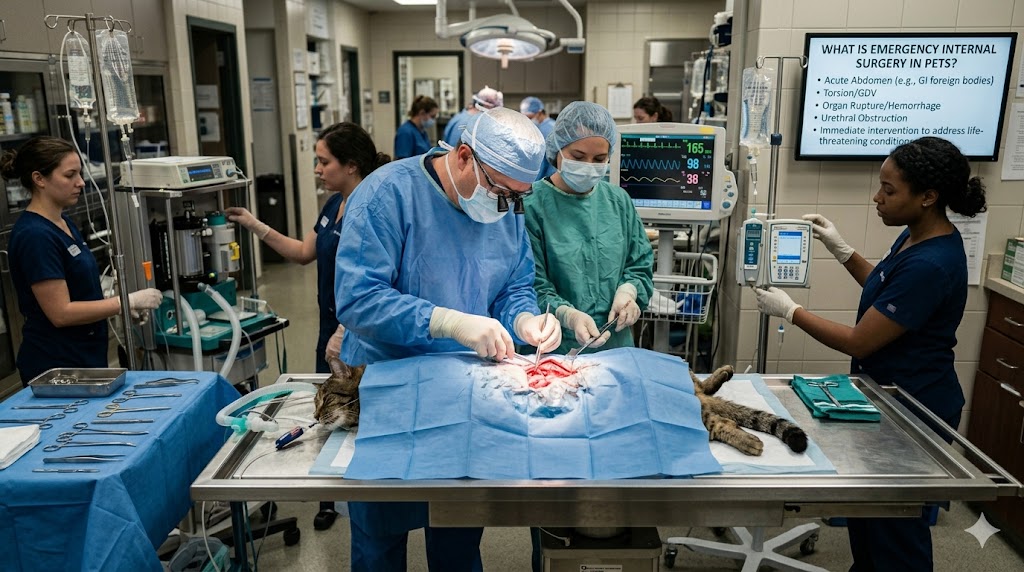
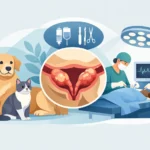
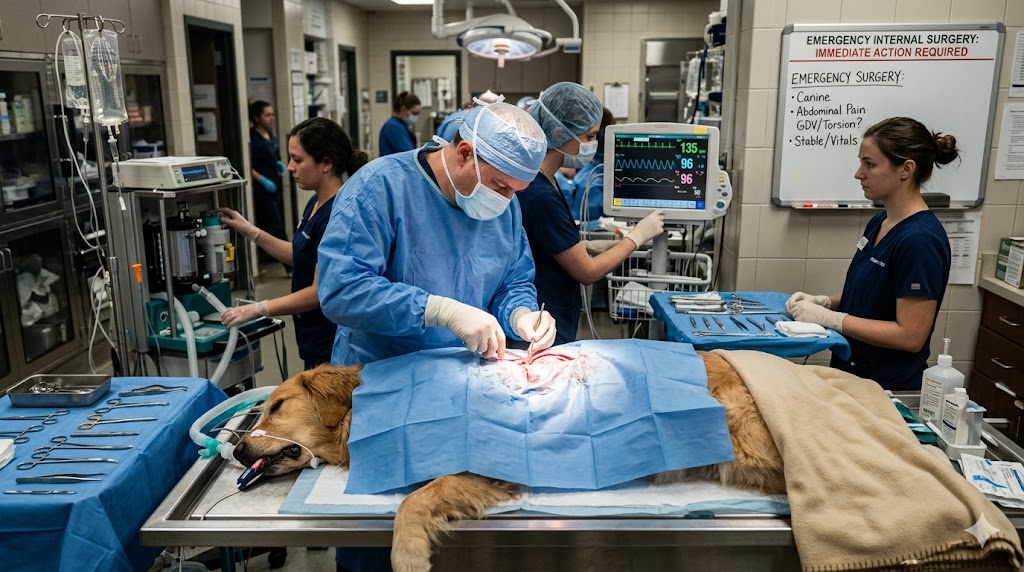
Internal Emergency Surgery: This type of surgery is performed on an animal with an internal organ that is having a life-threatening event or condition. This could include animals that have a life-threatening issue within the stomach, intestines, spleen, bladder or abdominal area. All internal surgeries performed in an emergency way cannot be delayed. They are performed on the animal when there is a sudden, severe medical problem that is either causing damage to the function of one of these organs, causing internal bleeding or blockage or a rupture of the organ.
Critical Symptoms That Demand Immediate Veterinary Attention
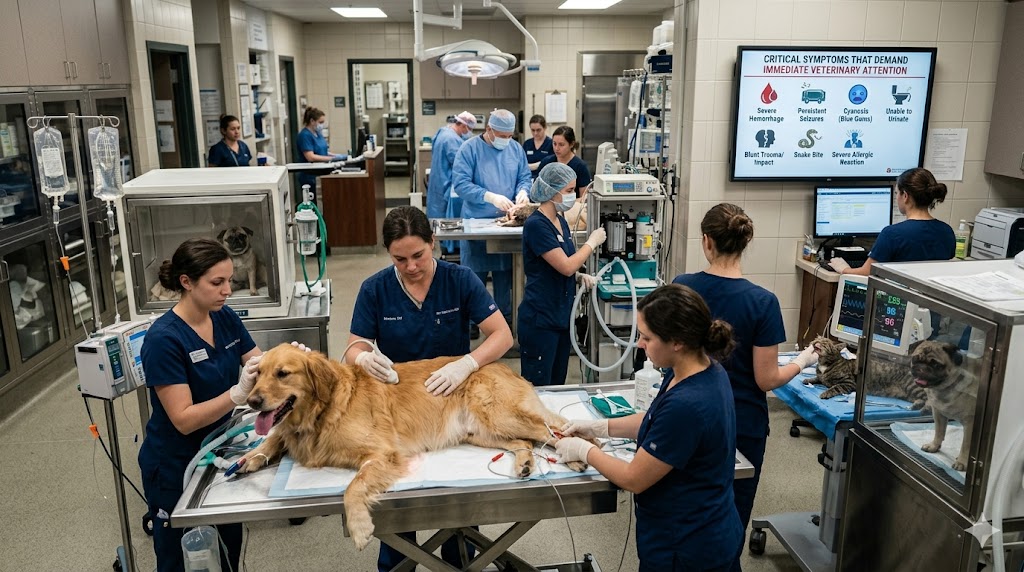
1. Bloated or Distended Abdomen
An enlarged abdomen may also signal the presence of GDV (gastric dilation–volvulus) which is commonly referred to as bloat or stomach bloating — essentially your pup’s stomach has become full of gas and has twisted on itself — and if left untreated can be deadly in a matter of hours! Time to rush your pup to an emergency vet; do not delay and watch the situation develop!
2. Repeated Vomiting or Unproductive Retching
When your pet continues to vomit, especially if there is nothing coming out or they appear to be in pain when retching, it may indicate something that’s preventing pooping and also could lead to stomach distortion (torsion). One vomiting event may not be a medical emergency, but several vomiting events without reliving pain that has occurred repeatedly would be reason to contact your veterinarian.
3. Sudden Collapse or Extreme Weakness
If your pet suddenly collapses, has trouble standing up, or is disoriented, he could be suffering from internal bleeding due to a ruptured splenic mass or an abdominal organ. This is a veterinary emergency. The combination of collapsed and pale or white gums could indicate that your pet has lost a lot of blood.
4. Inability to Urinate or Painful Urination
One of the most serious emergencies for cats, in particular, is a urinary blockage. If you notice that your cat is attempting to urinate, vocalizing distress when trying to urinate, or is producing little to no urine, there is a good chance that his (or her) bladder is blocked and it will rupture if not surgically relieved. Male cats are the most susceptible.
5. Severe Abdominal Pain
Signs of abdominal pain may include refusing to move, arching of the back, reluctance to allow anyone to touch their abdomen, and/or whining/growling when someone touches their stomach area. Abdominal pain may indicate that a patient has peritonitis (infection in the abdomen), perforation of the intestines, or torsion of an organ.
6. Pale, White, or Blue-Tinged Gums
The gums of a healthy pet should have a pinkish hue and be wet to the touch. Pale (white), greyish, or blue (sometimes referred to as cyanotic) gums indicate there is not enough blood circulating through the body (poor circulation/oxygenation of the body) and may often be due to internal bleeding or shock. Regularly checking your pet’s gums helps you determine what is normal for your pet.
7. Sudden Loss of Appetite Combined with Lethargy
If your animal skips a meal but continues to have an appetite, this can be normal behaviour; however, if you then witness a loss of appetite or if he or she displays significantly decreased activity, withdrawal, (hiding behaviour) or has a hunched posture over time (i.e., multiple hours), it could indicate a serious health condition within.
What to Do If You Notice These Symptoms
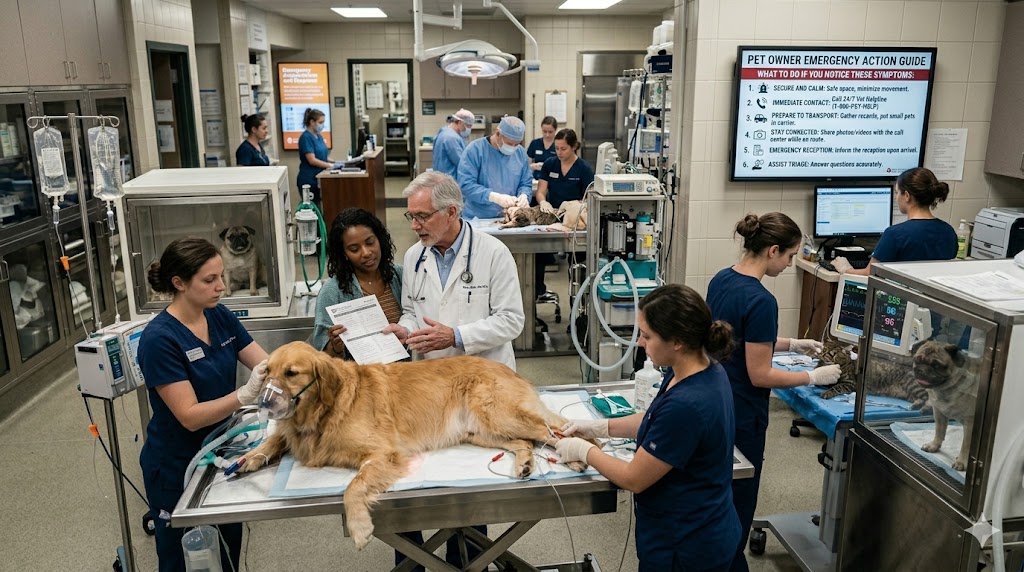
- Never give your pet medication without consulting a veterinarian. Many pain relievers used for people are dangerous for animals.
- You will want to keep your pet calm and stationary, as additional movement has the potential to aggravate internal bleeding.
- When you bring your pet in for help, call the veterinary emergency room so that they are ready for your arrival.
- If surgery may be necessary, do not let your pet have food or water because anything in the stomach could make it more difficult to administer an anesthetic.
Time Is the Most Critical Factor
Pets experiencing an internal emergency do not have time to wait. Organs can sustain irreparable damage in just a couple of hours. Toxins from a ruptured intestinal tract or a blocked bladder can quickly spread through the bloodstream and cause sepsis. Internal bleeding can result in irreversible cardiovascular collapse. The sooner a diagnosis is made and surgery performed, the greater the chance that your pet will fully recover.
Conclusion
Instincts as part of being a pet parent are important. If you think something’s wrong with your pet, listen to yourself and act accordingly. The only way your pet can alert you to getting them the help they need urgently is by exhibiting symptoms of an emergency – bloating, collapsed (down), or having pale gums & experiencing severe unrelenting pain. At the AV Veterinary Center, our specialty surgical team has years of experience treating pets who are experiencing internal emergencies with as much speed, accuracy, and compassion as possible. With so many things that can happen in an emergency, there’s no reason to wait to call us for fast, immediate service when your pet absolutely needs it!
FAQs
How do I know if my pet’s vomiting is serious enough to go to the emergency vet?
This is a great question, and many dog and cat owners have this same question. If your pet has vomited once, there is generally no need to be overly concerned about that. However, if your pet is vomiting frequently, vomiting without bringing something up, or retching and not being relieved of retching (in conjunction with a distended/bloated abdomen, or any of these things plus weakness and/or absence of movement), you need to get to your vet without delay. If you are in doubt, get them checked out rather than suffer through it.
My dog’s stomach looks a little puffy. Should I be worried?
Do not overlook a distended or swollen abdomen; this is particularly true with larger or deeper-chested dog breeds as this can indicate gastric dilatation volvulus (GDV) and GDV is considered to be one of the deadliest situations for dogs and could result in death within a matter of hours. Please do not attempt to monitor the situation from home and if you see your dog’s abdomen swollen and you feel that it is hard as well as your dog exhibiting any signs of distress, please take your dog to an emergency animal hospital immediately.
My cat keeps going to the litter box but isn’t producing much urine. Is that an emergency?
Yes, definitely! Male cats are more susceptible to having severe problems with blockage of their urinary tract than females; if a blockage is not managed in a timely manner, the bladder may potentially rupture and the toxins build up in the body could become fatal to your cat in 24 to 48 hours after the blockage has occurred. If your male cat appears to be straining to urinate, vocalizing loudly while trying to urinate or only urinating small amounts of urine, THEN you need to consider that situation as an emergency and IMMEDIATELY seek out veterinary care for your cat!
How do I check if my pet’s gums are a warning sign?
It really is simple! You just need to lift your pet’s top lip back so you can see the gum line. Your pet’s gums should be pink in color and moist, similar to the way the inside of your cheek is. If the gums appear pale, white, gray, or blue or have a bluish tinge, this is an emergency indication that there may be a problem with your pet’s internal organs, either due to internal bleeding or shock. Pet owners can quickly learn to perform this check on their pet.