Services

Patellar Luxation Surgery in Pets

Trust AV Veterinary Center in Lancaster for expert Patellar Luxation Surgery in Pets. Complete care and advanced procedures for your pet’s health and comfort.

Need help with this service? Reach out and we'll get back to you soon.

Section 01

Patellar Luxation Surgery in Pets

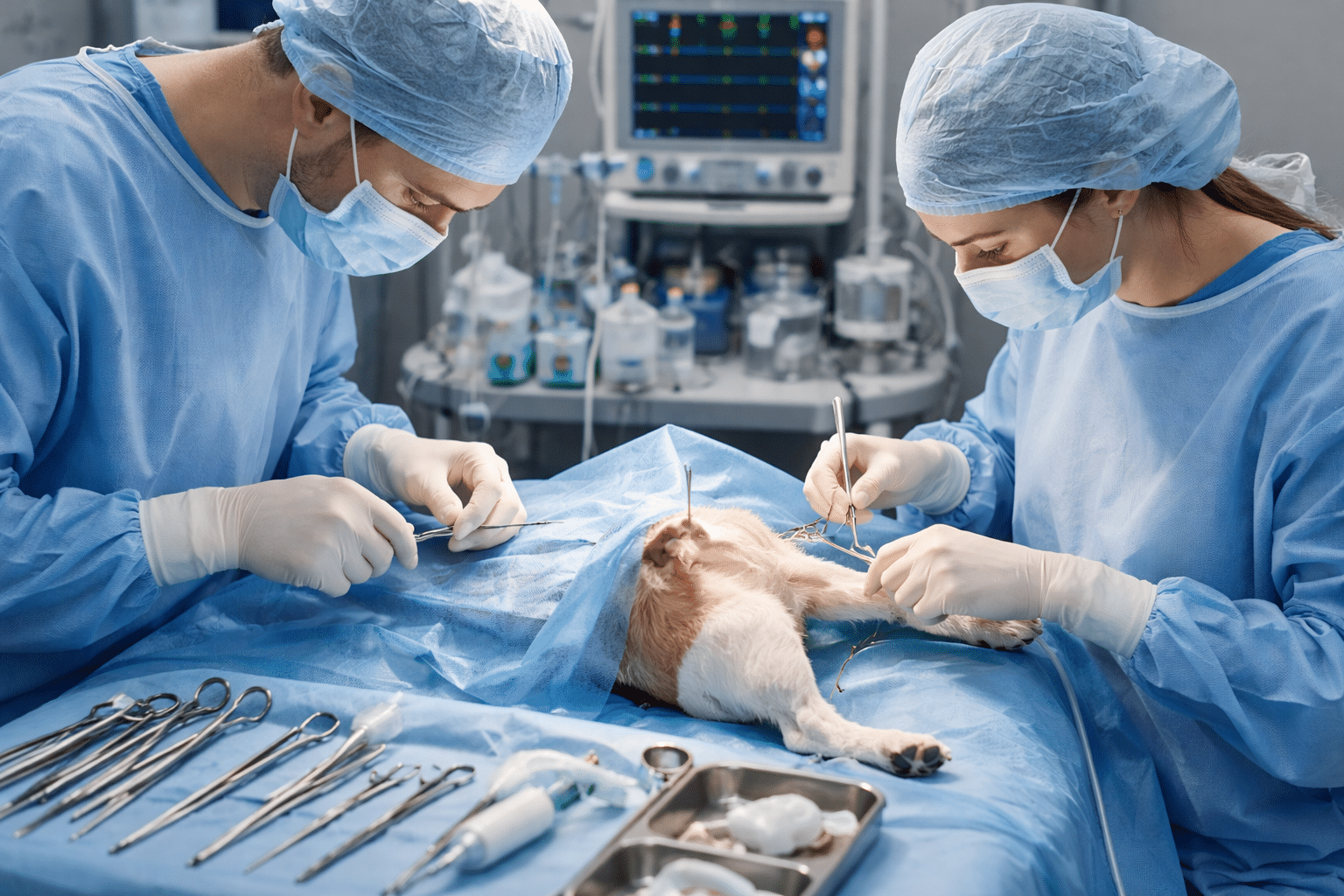
Patellar luxation is an orthopedic condition that often occurs in dogs and sometimes in cats. It involves the patella (the kneecap) moving out of its usual groove on the femur. If the dislocation is very slight, it might be possible to control the symptoms without surgery. However, if a patellar luxation surgery dog is carried out in case of a major dislocation, it is done to alleviate pain, to restore the function of the limb, and to prevent progressive arthritis. Besides dogs, this condition can also affect cats. Therefore, patellar luxation cat cases should be identified as soon as possible. Let’s explore the meaning of patellar luxation, the situations when veterinary knee surgery pets is the best solution, the steps taken, recovery, and long-term results, both for pet parents and veterinarians.
Patellar Luxation Surgery in Pets - Patellar Luxation Surgery in Pets
Section 02

What Is Patellar Luxation?

The kneecap normally moves along with the femur groove when the knee is bent. In a case of patellar luxation, the patella gets out of the groove either on the inside (medial) or on the outside (lateral) of the femur, leading to knee instability, which in time may call for kneecap dislocation dog surgery .

What Is Patellar Luxation? - Patellar Luxation Surgery in Pets
Section 03

Types

Medial Patellar Luxation (MPL) : Is the most frequently seen, especially in small dogs, and is usually handled by medial patellar luxation surgery . Lateral Patellar Luxation (LPL) : Is the type that occurs frequently in big breeds and is mainly characterized by trauma or is of congenital origin.

Types - Patellar Luxation Surgery in Pets
Section 04

Which Pets Are More Affected?

Common Dog Breeds: Cats : Cases of less common patellar luxation cat may occur and be bilateral.

  • Chihuahuas
  • Pomeranians
  • Yorkshire Terriers
  • Toy & Miniature Poodles
  • Shih Tzus
  • Boston Terriers
Which Pets Are More Affected? - Patellar Luxation Surgery in Pets
Section 05

Clinical Signs

Without treatment, luxation may eventually lead to cartilage damage and arthritis, which will most likely require veterinary knee surgery pets from the vet.

  • Intermittent skipping or hopping gait
  • Sudden lifting of a hind leg during running
  • Hindlimb lameness that comes and goes
  • Pain on knee extension
  • Bow-legged or knock-kneed stance (advanced cases)
Clinical Signs - Patellar Luxation Surgery in Pets
Section 06

Patellar Luxation Grading

From III and IV patients with pain or impaired function, may have benefited from patellar luxation surgery dog.

Patellar Luxation Grading - Patellar Luxation Surgery in Pets
Section 07

When Surgery is Recommended?

Surgery is suggested if: Correcting a kneecap dislocation dog surgery at an early stage not only improves the outcome but also limits the development of arthritis.

  • Lameness or pain is persistent
  • Luxation is Grade II with clinical signs
  • Grade III or IV is diagnosed
  • There is progressive arthritis or deformity
  • Conservative management fails
When Surgery is Recommended? - Patellar Luxation Surgery in Pets
Section 08

Surgical Techniques Utilized (Often Combined)

Trochlear Sulcoplasty Tibial Tuberosity Transposition (TTT) Soft Tissue Balancing Corrective Osteotomies (Selected Cases) First of all, a majority of patients, particularly those undergoing surgery for medial patellar luxation , require a mixture of methods that are adjusted to their anatomy and the severity of the condition in medial patellar luxation surgery .

  • Deepens the groove in the femur
  • Allows the patella to be seated properly
  • Realigns the patellar tendon
  • Correct the abnormal pull on the kneecap
  • Tightening the capsule on one side
  • Releasing tension on the opposite side
  • For severe bone deformities in large breeds
Surgical Techniques Utilized (Often Combined) - Patellar Luxation Surgery in Pets
Section 09

Anesthesia & Hospital Care

Modern anesthesia has made veterinary knee surgery for pets extremely safe.

  • Under general anesthesia
  • Multimodal analgesia (opioids, NSAIDs, local blocks)
  • Hospital stay: 1-3 days, depending on the case
Anesthesia & Hospital Care - Patellar Luxation Surgery in Pets
Section 10

Recovery After Patellar Luxation Surgery

First 2 Weeks Weeks 3-8 Follow-Up The total time for recovery after a patellar luxation surgery in dogs is about 8-12 weeks.

  • Complete rest, only short walks on a leash allowed
  • Use of an Elizabethan collar (cone)
  • Checking the wound daily
  • Slowly increase the amount of controlled movement
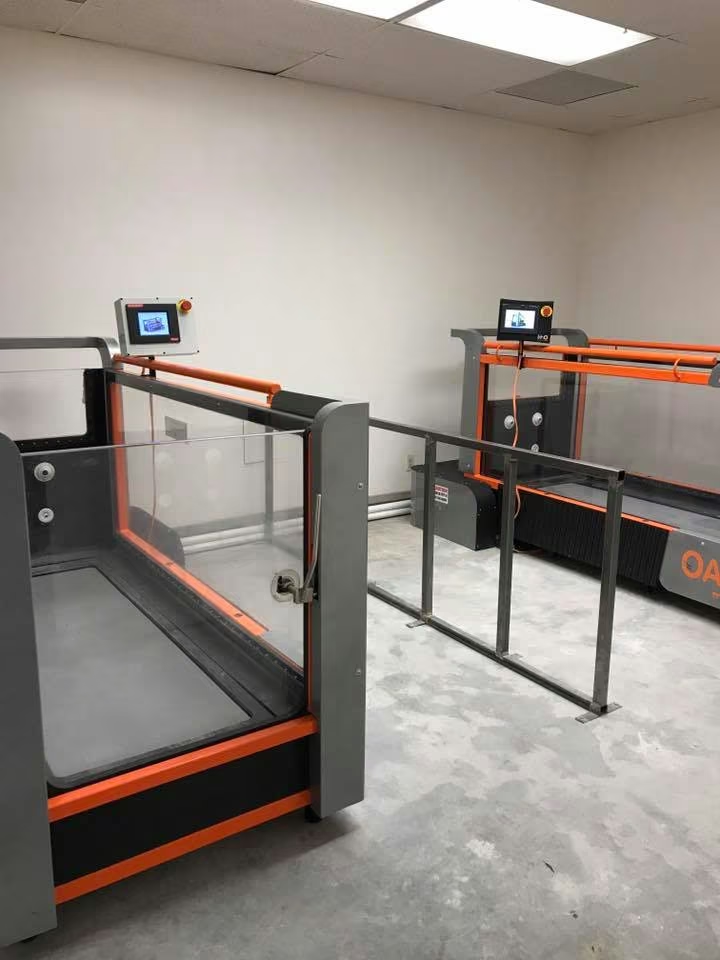
  • Physical therapy is highly advised
  • Exercises that help strengthen muscles and improve the range of motion
  • Reexaminations and, if necessary, X-rays
  • Removal of sutures/staples after 10-14 days
Recovery After Patellar Luxation Surgery - Patellar Luxation Surgery in Pets
Section 11

Prognosis

The prognosis is: The majority of animals become pain-free and functional after kneecap dislocation dog surgery and get back to their normal activities.

  • Excellent for Grades II-III if surgery and rehab are properly done
  • Good for Grade IV (depends on the severity and deformity)
Prognosis - Patellar Luxation Surgery in Pets
Section 12

Can Both Knees Be Treated?

  • Many animals suffer from bilateral luxation.
  • Operations are mostly staged (one knee at a time)
  • This way, the stress is reduced, and the recovery is improved
Can Both Knees Be Treated? - Patellar Luxation Surgery in Pets
Section 13

What Happens If Surgery Is Not Done?

Early intervention with veterinary knee surgery for pets results in the prevention of long-term damage.

  • Progressive arthritis
  • Chronic pain and limping
  • High risk of rupture of the cranial cruciate ligament (CCL)
  • Lowered life quality
What Happens If Surgery Is Not Done? - Patellar Luxation Surgery in Pets
Section 14

When to Seek Veterinary Evaluation

  • Repeating, skipping, or hopping gait
  • Hindlimb lameness in young pets
  • Increasing pain or difficulty getting up
  • Known patellar luxation with new symptoms
When to Seek Veterinary Evaluation - Patellar Luxation Surgery in Pets
Section 15

Surgery Restores Stability and Comfort

When the patient is properly selected and the rehabilitation is done correctly, patellar luxation surgery is a very successful orthopedic procedure . Be it medial patellar luxation surgery, patellar luxation cat, or kneecap discoloration dog surgery, early correction of kneecap instability can eliminate pain, bring back mobility, and be beneficial to the joint for the whole life. If your dog is occasionally limping or has been diagnosed with patellar luxation, a surgical consultation focused on patellar luxation surgery dog can make a significant difference.

Surgery Restores Stability and Comfort - Patellar Luxation Surgery in Pets