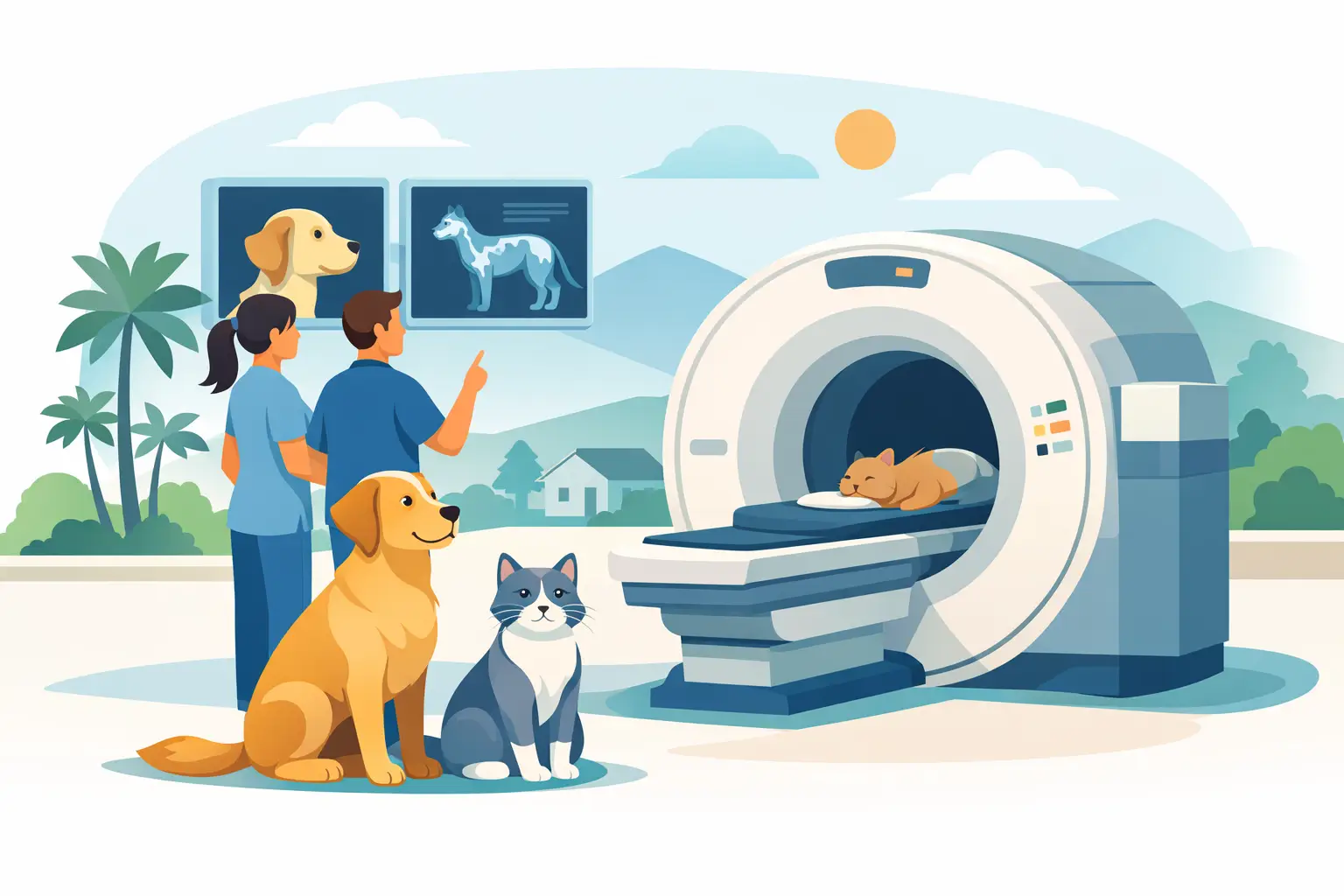
When a pet is in pain and the cause is not obvious on an exam or standard X-rays, waiting for answers can feel overwhelming. A CT scan for pets in Antelope and Santa Clarita Valley gives veterinarians a faster, more detailed look inside the body, helping families move from uncertainty to a clear treatment plan.
For many dog and cat owners, the hardest part is not knowing what is wrong. A pet may be limping, struggling to breathe, dealing with chronic ear infections, showing neurologic changes, or recovering poorly after an injury. In those moments, advanced imaging is not about technology for its own sake. It is about finding answers sooner, reducing guesswork, and choosing the right care with confidence.
When a CT scan for pets in Antelope and Santa Clarita Valley is recommended
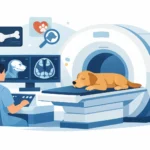
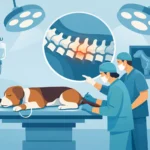
A CT scan, or computed tomography scan, uses detailed cross-sectional images to evaluate structures that can be difficult to assess with traditional imaging alone. In veterinary medicine, it is often used when a pet needs a more complete picture of bones, joints, the skull, nasal passages, chest, abdomen, spine, or certain soft tissues.
This matters in real-life situations that families see every day. A dog with a persistent limp may need more than an X-ray if there is concern for a complex fracture, elbow disease, or a subtle orthopedic issue. A cat with ongoing nasal discharge may need advanced imaging to help distinguish inflammation from a mass or structural problem. A pet with seizures, balance changes, or spinal pain may need CT as part of a larger neurologic workup.
CT can also be especially useful for surgical planning. If a pet has a tumor, bladder stones, severe ear disease, or trauma, detailed imaging helps the veterinary team understand the size, location, and extent of the problem before treatment begins. Better planning often means better decisions, and better decisions can improve comfort, safety, and outcomes.
What makes CT different from X-rays and ultrasound
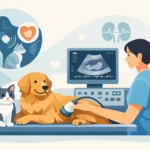
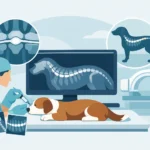
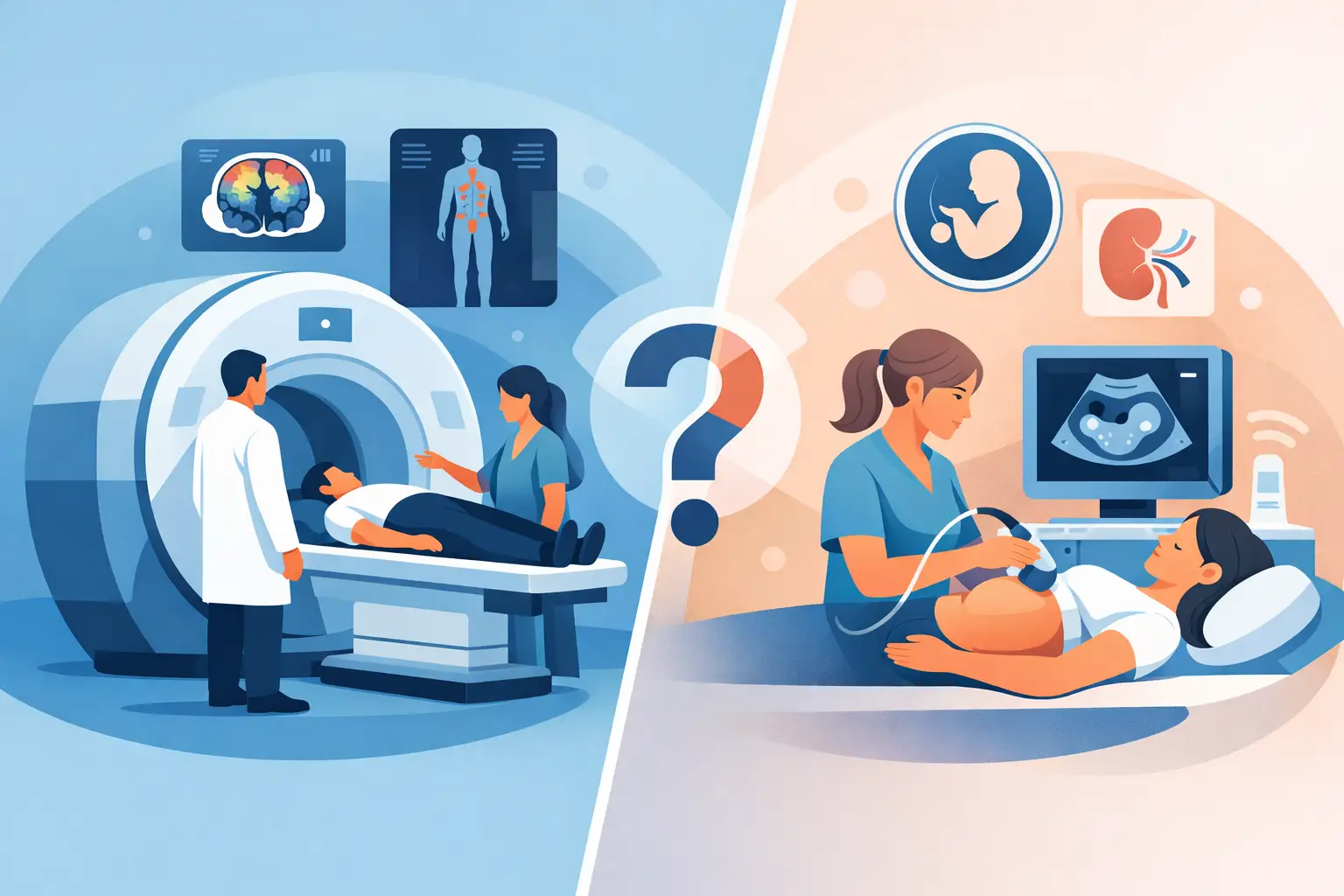
Pet owners often ask why a CT scan is needed if their pet has already had X-rays or an ultrasound. The answer depends on the medical problem. X-rays are valuable and often the first step, but they provide a flatter, less detailed view. Ultrasound is excellent for evaluating many abdominal organs and certain soft tissue concerns, but it does not replace CT in every case.
CT creates layered images that give veterinarians a much more precise view of anatomy. That can be particularly helpful in areas with complicated structures, such as the head, spine, chest, and joints. If a pet has chronic ear disease that may require surgery, a CT scan can show the extent of change deep within the ear canal and surrounding bone. If there is trauma after an accident, CT may reveal injuries that are difficult to fully define on standard radiographs.
That said, CT is not automatically the best test for every pet. Sometimes bloodwork, X-rays, ultrasound, or direct examination give enough information to begin treatment. The right diagnostic approach depends on the symptoms, the urgency of the case, and what questions your veterinarian is trying to answer.
What the CT scan process looks like for your pet
Most pets need sedation or anesthesia for a CT scan. That is not because the scan is painful. It is because the images must be extremely still and precise, and even a calm pet will move enough to blur the results. Your veterinary team will evaluate your pet’s age, medical history, and overall condition before recommending the safest approach.
In many cases, the scan itself is relatively quick. The time around the scan usually involves a fuller process, including an exam, review of symptoms, possible bloodwork, anesthesia or sedation preparation, image acquisition, and interpretation. If contrast material is needed to highlight certain tissues or structures, that may also be part of the plan.
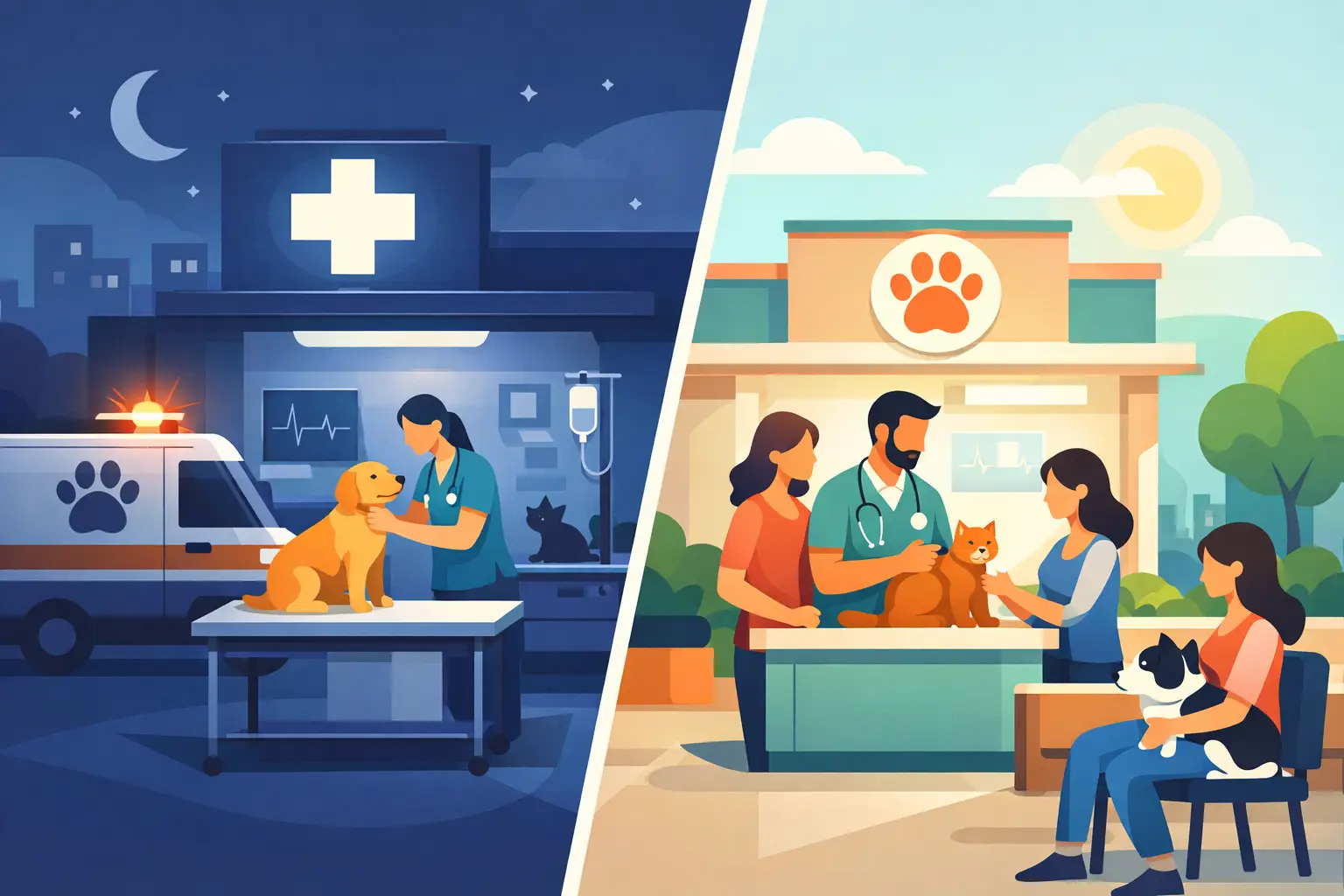
For families, one of the biggest benefits of local advanced imaging is convenience during a stressful time. When a veterinary hospital can combine diagnostics, treatment planning, surgery, urgent care, and follow-up in one place, it often reduces delays and helps owners avoid coordinating care across multiple facilities. That can make a meaningful difference when a pet is uncomfortable or a condition is progressing quickly.
Conditions CT may help diagnose in dogs and cats
CT is commonly used in both urgent and non-emergency cases. In orthopedic medicine, it can help evaluate fractures, joint abnormalities, elbow dysplasia, and complex bony changes. In neurologic and spinal cases, it may be part of the workup for back pain, weakness, or difficulty walking.
In soft tissue and internal medicine cases, CT may help assess tumors, chest abnormalities, nasal disease, abdominal concerns, and certain urinary issues such as bladder stones. It is also widely used in severe ear disease, especially when surgery is being considered. For pets with trauma, CT can be an important tool for identifying injuries more completely and quickly.
Not every abnormality seen on CT leads to surgery. Sometimes the value of the scan is that it helps rule out more serious causes, guides medical management, or shows that a less invasive treatment is appropriate. That is one reason advanced diagnostics can be so valuable. Good imaging does not just identify what is wrong. It can also help prevent unnecessary procedures.
Choosing local advanced imaging for your pet
If you are searching for a CT scan for pets in Antelope and Santa Clarita Valley, you are likely trying to balance speed, trust, and quality of care. You want answers, but you also want a team that explains what they are seeing, what the next steps are, and what your pet may need afterward.
That is where full-service veterinary hospitals with advanced capabilities stand out. When the same team can assess your pet, perform imaging, interpret findings, and carry treatment forward, the experience is often more coordinated and less stressful. This is especially important for pets with urgent needs, senior pets with multiple health concerns, or pets who may require surgery and rehabilitation after diagnosis.
AV Veterinary Center is one example of the kind of regional hospital many families look for when they need both compassionate care and advanced medical support close to home. For pet owners in the Antelope Valley and nearby communities, having access to CT alongside general practice, urgent care, surgery, and recovery services can simplify a very difficult moment.
Questions to ask before your pet’s CT scan
It helps to know what the scan is meant to answer. Ask your veterinarian what they are looking for, whether sedation or anesthesia is recommended, and how the results may change treatment. In some cases, the scan confirms the need for surgery. In others, it may support medication, monitoring, or referral for another service.
You can also ask about timing. Some conditions should be imaged quickly, especially trauma, breathing issues, neurologic symptoms, or rapidly worsening pain. Others can be scheduled after initial stabilization or after basic tests have been completed. Knowing the reason for the timing can help you feel more prepared.
Cost is another fair question. CT is more advanced than standard X-rays, so it is typically a larger investment. But there is a trade-off worth considering. A precise diagnosis earlier in the process can sometimes reduce repeated testing, shorten delays, and lead to a more effective treatment plan.
Moving from uncertainty to a plan
Few things are harder than seeing your dog or cat struggle while you wait for answers. Advanced imaging can be the turning point that clarifies what is happening and what your pet needs next. Whether the issue is a painful joint, a chronic ear problem, a possible mass, trauma, or a neurologic concern, a CT scan can help replace uncertainty with direction.
If your veterinarian recommends advanced imaging, that recommendation is usually based on a specific need for greater detail, not a routine extra step. The goal is simple – understand the problem clearly, treat it thoughtfully, and support your pet with the level of care they deserve. When your pet is family, having that kind of guidance close to home matters.