

Meniscal Tear in Pets | AV Veterinary Center
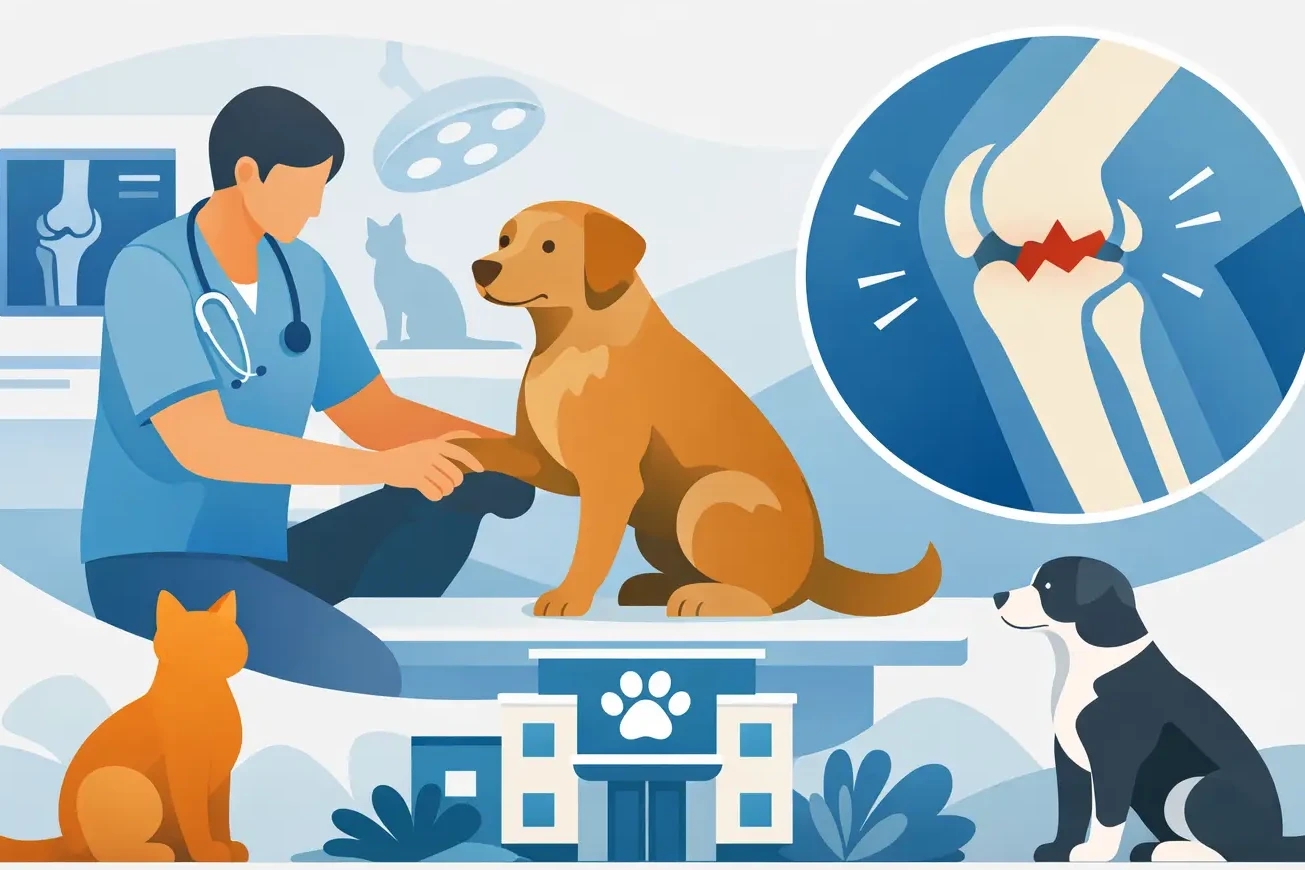
A dog that suddenly stops putting weight on a back leg after running, jumping, or even just turning too quickly can go from playful to painful in seconds. When families search for answers about a meniscal tear in pets, AV Veterinary Center understands they are not just looking for a diagnosis. They want to know what happened, how serious it is, and what care will help their pet move comfortably again.
The meniscus is a small but important piece of cartilage inside the knee joint. Each knee has two menisci that act like cushions between the bones, helping with shock absorption, joint stability, and smooth movement. When one of these structures tears, it can cause significant pain and limping. In dogs, meniscal injuries are especially common alongside cranial cruciate ligament problems, though trauma and joint wear can also play a role. Cats can experience meniscal injury too, but it is less common.
What a meniscal tear in pets really means
A meniscal tear is not just a simple strain. It involves damage to cartilage inside the knee, often in the medial meniscus, which is the inner cushion of the joint. Because this tissue helps distribute force with every step, a tear can make normal movement painful and unstable.
Some tears happen suddenly after an injury. Others develop because the joint has already become unstable over time. This is one reason a pet may seem to improve briefly with rest, then start limping again. The underlying problem has not fully resolved, and the meniscus continues to get pinched or irritated.
For many dogs, a meniscal tear does not happen in isolation. It is often associated with a torn or partially torn cranial cruciate ligament, which is similar in function to the ACL in people. When that ligament is damaged, the knee can shift abnormally, placing extra stress on the meniscus. That combination can make pain more intense and recovery more complex if both issues are not addressed.
Signs of meniscal tear in pets
The signs can vary depending on how severe the tear is, whether the injury is new or chronic, and whether another knee problem is involved. Most pet owners notice limping first. Some dogs toe-touch or avoid using the leg altogether. Others walk on it part of the time but seem stiff after rest or activity.
You may also notice difficulty rising, hesitation on stairs, reduced interest in walks, or resistance to jumping into the car or onto furniture. Some pets sit with the affected leg out to the side. Others show more subtle signs, like slowing down, seeming less playful, or becoming irritable when the leg is touched.
In some cases, the knee may click during movement. That sound can happen when a torn piece of meniscus shifts inside the joint. Not every meniscal tear causes an obvious click, but when it does, it is a meaningful clue.
Swelling around the knee, muscle loss in the affected leg, and signs of pain with joint flexion or extension may also be present. Because limping can result from many orthopedic issues, a proper veterinary exam is the best way to sort out what is happening.
Why diagnosis needs more than rest and observation
Rest matters, but it does not tell you why a pet is limping. Knee injuries can look similar from the outside, and a meniscal tear may be missed if the evaluation stops at symptom management alone.
A thorough orthopedic exam is the starting point. Your veterinarian will assess how the joint moves, whether there is instability, how your pet bears weight, and where pain occurs. This hands-on assessment often provides key information, especially when paired with a careful history of when the lameness started and how it has changed.
Imaging may also be recommended. X-rays are useful for evaluating the bones, joint changes, and signs of arthritis or effusion, but they do not show the meniscus directly as clearly as advanced imaging can. In more complex cases, additional diagnostics may be appropriate to better understand the injury and plan treatment.
This is where access to advanced diagnostics can make a difference. A facility that offers both orthopedic evaluation and higher-level imaging can help families move from uncertainty to a clear treatment plan without unnecessary delays.
Treatment depends on the full knee problem
There is no one-size-fits-all answer for meniscal injuries. Treatment depends on the severity of the tear, your pet’s size and activity level, whether the cranial cruciate ligament is involved, and how long the injury has been present.
For mild cases or patients who are not surgical candidates, conservative management may be discussed. This can include strict activity restriction, pain control, anti-inflammatory medication when appropriate, joint support, and a structured rehabilitation plan. Conservative care may help some pets feel better, but it does not repair a torn meniscus. If the knee remains unstable, discomfort can persist or return.
When a meniscal tear is linked to cranial cruciate disease, surgery is often the most effective way to improve comfort and function. During surgery, the torn portion of the meniscus can be assessed and treated, while the underlying instability in the knee is addressed at the same time. The exact surgical approach depends on your pet’s anatomy, the nature of the injury, and the surgeon’s findings.
The reason this matters is simple. If only the symptoms are treated and the mechanical problem remains, the joint continues to be stressed. That can lead to ongoing pain, worsening arthritis, and a harder recovery later.
Surgery and recovery at AV Veterinary Center
For families dealing with a meniscal tear in pets, AV Veterinary Center provides a level of care that supports the entire process, from diagnosis through recovery. That includes advanced orthopedic evaluation, surgical capability, and rehabilitative support in one place.
Recovery after knee surgery is not immediate, and honest expectations matter. Most pets need several weeks of restricted activity, followed by gradual reintroduction of movement. Pain management, incision care, and close follow-up are all important. Some pets begin using the leg more comfortably within days, while others take longer to rebuild strength and confidence.
Rehabilitation can play a major role in that progress. Controlled exercises, mobility work, and therapies such as underwater treadmill sessions or hydrotherapy may be recommended in select cases. These tools can help improve strength and range of motion while reducing impact on healing joints. Not every patient needs the same rehab plan, which is why individualized treatment is so important.
Age, weight, pre-existing arthritis, and overall health all influence recovery. A young athletic dog may regain function differently than a senior dog with chronic joint disease. The goal is not just healing on paper. It is helping your pet return to daily life with better comfort, safer movement, and the best long-term joint support possible.
When to seek care right away
Some limping can wait for a prompt appointment, but certain signs should be evaluated quickly. If your pet cannot bear weight, cries out when moving, has sudden severe swelling, or shows worsening pain despite rest, urgent assessment is the right step. Delaying care can allow joint damage to progress and may make treatment more complicated.
Even if the limp seems mild, it is worth paying attention when it lasts more than a day or two, keeps coming back, or is paired with stiffness and reluctance to exercise. Pets are good at masking discomfort. By the time changes are obvious at home, the joint may already be significantly inflamed or unstable.
The earlier a knee injury is diagnosed, the easier it is to build an effective care plan. That may mean medical management, surgical treatment, rehabilitation, or a combination of these options based on what your pet truly needs.
A painful knee can change how your pet walks, plays, rests, and interacts with your family. Getting answers early gives you the best chance to protect joint function and help your dog or cat get back to a more comfortable life. If something about your pet’s movement does not seem right, trust that instinct and have it checked.