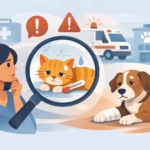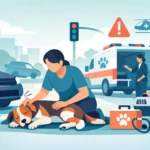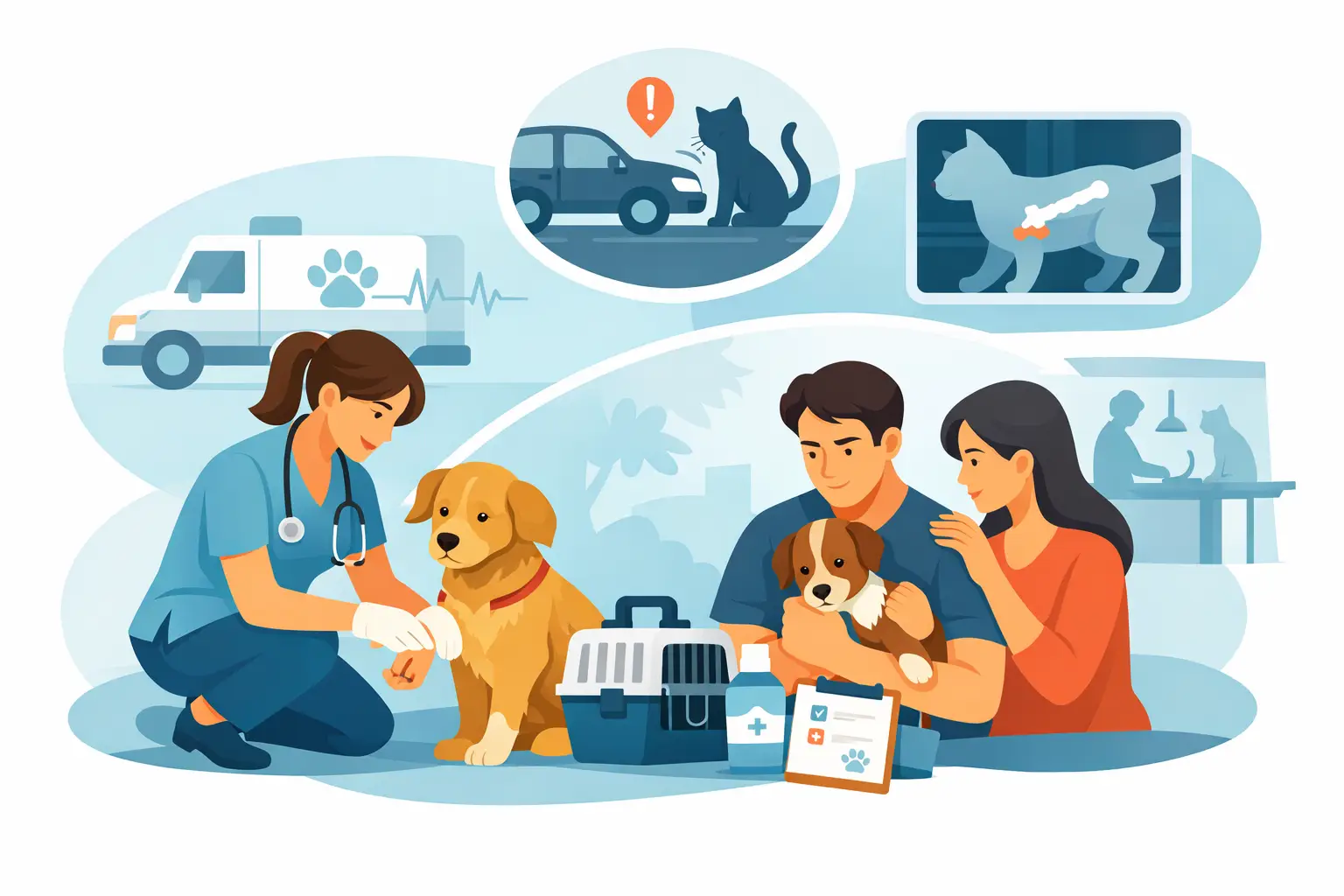
A dog hit by a car, a cat with a sudden fall, a pet bitten during a fight – these moments are chaotic, frightening, and time-sensitive. Knowing the right pet trauma care steps can help you protect your dog or cat on the way to veterinary treatment without causing more harm.
Trauma is not always dramatic at first glance. Some pets cry out and cannot stand, while others seem quiet, alert, or even try to walk away despite serious internal injuries. That is one reason early action matters. The goal at home is not to diagnose the full extent of the injury. It is to keep your pet as stable as possible, prevent additional damage, and get professional care quickly.
The first pet trauma care steps at the scene
Your first move is to slow the scene down. A scared, injured pet may bite, scratch, or bolt even if they are normally gentle. Pain and adrenaline change behavior fast. Approach carefully, speak in a calm voice, and keep sudden movements to a minimum.
If the area is unsafe, such as a road, parking lot, or active backyard confrontation, move your pet only as much as needed to prevent immediate danger. Safety matters for both of you. If your pet is conscious, use a towel or blanket to help control movement. For cats and small dogs, a box, carrier, or wrapped blanket can provide support during transport. For larger dogs, a flat surface like a board, a sturdy blanket used as a stretcher, or two people lifting together can reduce motion.
One important trade-off is this: moving too little can leave your pet in danger, but moving too much can worsen fractures, spinal injuries, or internal bleeding. If you suspect a broken bone, head trauma, or back injury, keep the spine and limbs as still as possible while transporting.
Check breathing and bleeding first
After you have your pet in a safer position, look for the most urgent threats. Is your pet breathing? Is there heavy bleeding? These are the problems that can become life-threatening within minutes.
If your pet is not breathing or appears unconscious, immediate veterinary guidance is critical. If a foreign object is visible in the mouth and easy to remove, clear it gently. Do not blindly sweep your hand deep into the mouth, especially in a distressed pet. If breathing is labored, keep the neck extended in a neutral position and avoid compressing the chest.
Bleeding should be addressed with direct pressure. Use a clean towel, gauze, or cloth and press firmly over the wound. If blood soaks through, add more material on top rather than lifting the original layer away. Lifting it can disrupt clotting and restart bleeding. If the injury involves a limb, light pressure and support can help, but avoid tight improvised tourniquets unless specifically directed by a veterinary professional. Poorly applied tourniquets can cause major tissue damage.
If an object is lodged in the body, do not remove it. It may be limiting bleeding, and pulling it out can make things worse. Stabilize the object as best you can and head straight in.
Keep your pet warm, quiet, and as still as possible
Shock is a real concern after trauma, even when bleeding is not obvious. Pets in shock may have pale gums, rapid breathing, weakness, a fast heart rate, cold limbs, or unusual quietness. Some pets become restless instead. The signs are not always textbook.
Cover your pet with a light blanket or towel to help conserve body heat, but do not overheat them. Keep the environment quiet and avoid food, water, or medications unless a veterinarian has told you otherwise. Many injured pets may need sedation, imaging, or surgery, and giving anything by mouth can complicate care.
This is where pet owners often try to help in ways that backfire. Human pain relievers, anti-inflammatory medication, and leftover prescriptions can be dangerous for dogs and cats. Even products that seem harmless can affect the kidneys, stomach, liver, or clotting. When in doubt, skip home medication and focus on transport.
What not to do during pet trauma care
Some mistakes are common because they come from a good place. Owners want to comfort, clean, or fix the problem before leaving home. In trauma cases, less is often safer.
Do not force your pet to walk to “see if they are okay.” A pet with a pelvic fracture, spinal injury, or internal damage may still try to move. That does not mean movement is safe. Do not aggressively clean deep wounds, push bones back into place, or bandage tightly without knowing what structures are involved. A simple clean cloth and gentle pressure are often more useful than a complicated home treatment.
It also helps not to judge severity by behavior alone. Cats especially can hide distress. A dog who wags their tail after an accident can still have life-threatening injuries. Breathing changes, gum color, weakness, collapse, abdominal swelling, or inability to urinate all deserve immediate attention.
When trauma is an emergency
Many trauma injuries need same-day veterinary evaluation, even when the pet seems stable during the drive. Emergency care is especially important if your pet has been hit by a car, fallen from a height, been attacked by another animal, experienced significant bleeding, fainted, had a seizure, or is struggling to breathe.
Other red flags include pale or blue gums, swollen abdomen, obvious fractures, severe limping, eye injuries, puncture wounds, uncontrolled pain, or sudden collapse. Bite wounds are often underestimated because the skin opening can look small while deeper crushing injury, contamination, or internal damage is extensive.
Head trauma deserves special caution. Pets with head injuries may seem disoriented, unusually sleepy, unable to stand normally, or have unequal pupils. These signs can change quickly. Immediate assessment gives your veterinarian the best chance to identify bleeding, swelling, or neurologic injury early.
What your veterinarian may need to do next
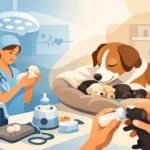
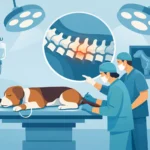
Once your pet arrives, the medical team will usually focus on stabilization before anything else. That may include oxygen support, pain control, IV fluids, wound care, bloodwork, and imaging such as X-rays or ultrasound. In more complex cases, advanced diagnostics like CT may be recommended to define fractures, internal injury, or neurologic trauma.
This staged approach can feel surprising to families who want every answer right away. In trauma medicine, the first priority is protecting breathing, circulation, and pain control. A full treatment plan often becomes clearer after the pet is stabilized. Some injuries require surgery immediately, while others are safer to address after your pet is medically stronger.
That is also why a full-service hospital can make a meaningful difference. When urgent care, surgery, diagnostics, and recovery support are available in one place, decisions can happen faster and more smoothly. At AV Veterinary Center, that continuity of care helps families move from crisis to treatment with less delay and more confidence.
Transport matters more than most owners realize
The ride to the hospital is part of trauma care. Keep your pet restrained but not compressed. A carrier is ideal for most cats and small dogs. Larger dogs should be supported on a firm surface when possible. Keep the head and neck in a neutral position unless breathing is easier another way.
If possible, have one person drive and another monitor the pet. Call ahead so the hospital can prepare for your arrival. Let the team know what happened, when it happened, whether your pet is conscious, and whether there is active bleeding or breathing trouble. Those few details can speed up triage as soon as you walk in the door.
If you are alone, that is okay. Focus on the basics: controlled movement, direct pressure if bleeding, warmth, and a calm trip to the clinic. Perfect first aid is not the goal. Safe, fast transport is.
After the first emergency, recovery still needs attention
Trauma care does not end when the immediate danger passes. Pets may need follow-up exams, repeat imaging, pain management, surgery, bandage changes, or rehabilitation. Recovery can be straightforward, but it can also involve setbacks such as swelling, infection, delayed lameness, or hidden orthopedic and neurologic issues that become clearer over time.
At home, watch for changes in appetite, breathing, energy level, urination, bowel movements, incision or wound appearance, and mobility. A pet that suddenly seems more painful, weak, or withdrawn after trauma should be rechecked. The first 24 to 72 hours can reveal injuries that were not obvious in the first moments after an accident.
The hardest part of a trauma event is that no pet owner gets time to prepare emotionally. You are asked to make smart decisions while scared and under pressure. If you remember anything, remember this: keep your pet safe, keep them still, control bleeding if you can, and get veterinary help quickly. Calm action in those first minutes can make a real difference for the family member counting on you.