The first night home after surgery can feel longer than the procedure itself. Your pet may be sleepy, unsteady, unusually quiet, or eager to return to normal before their body is ready. The best post surgery pet recovery tips begin with a simple goal: protect healing while keeping your dog or cat comfortable, calm, and closely observed.
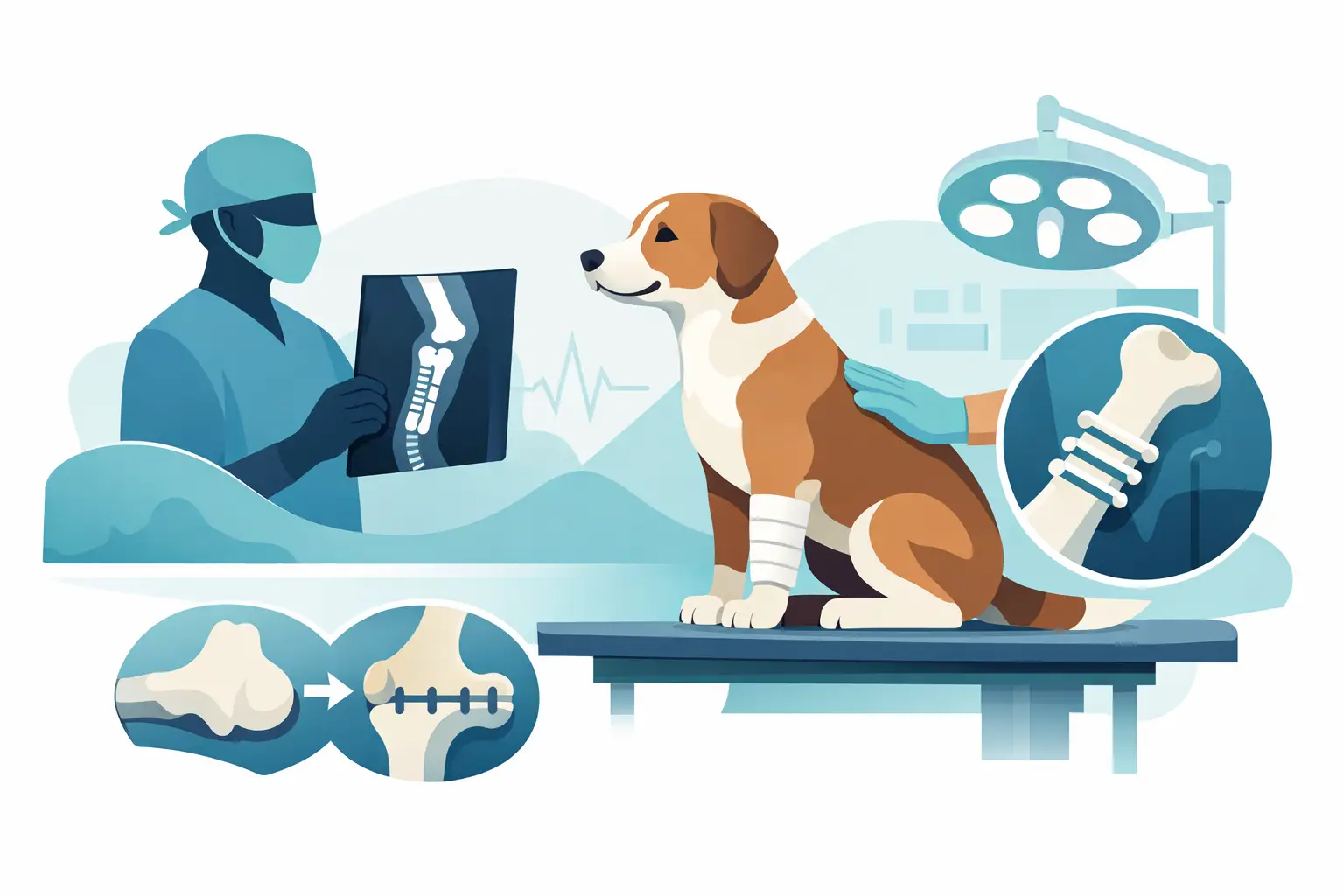
Every procedure has its own recovery plan. A pet recovering from a routine spay or neuter will have different restrictions than one healing from orthopedic, spinal, abdominal, bladder stone, or tumor-removal surgery. Your discharge instructions are always the primary guide. If something you see at home does not match what your veterinarian prepared you for, call and ask.
Best Post Surgery Pet Recovery Tips at Home
Prepare a quiet, controlled recovery space
Choose a clean, comfortable area away from stairs, rough play, visiting pets, and household traffic. For many dogs, a crate or small room is the safest option during the first stage of recovery. For cats, a quiet room with a low-sided litter box, food, water, and a soft bed can reduce stress and prevent unwanted jumping.
Keep bedding dry and easy to wash. Your pet may have an occasional accident while groggy from anesthesia, taking pain medication, or adjusting to reduced activity. A familiar blanket can be comforting, but avoid thick bedding that makes it difficult for a weak or unsteady pet to stand.
Do not allow access to furniture unless your veterinarian has specifically approved it. Even a short jump from a couch can strain an incision, disrupt a repair, or cause a painful slip. This matters especially after orthopedic or neurologic procedures, when controlled movement is part of the treatment.
Follow activity restrictions exactly
Pets often feel better before the surgical site has gained enough strength to handle normal activity. A cheerful dog that wants to chase a ball or a cat that suddenly attempts a countertop jump is not necessarily healed.
Leash walks should be short and limited to bathroom needs unless your veterinarian gives different instructions. Use a harness rather than pressure around the neck when appropriate, and keep the leash short enough to prevent pulling, lunging, or sudden turns. Avoid running, stairs, jumping, wrestling, dog parks, and off-leash time.
The restriction period depends on the surgery and your pet’s progress. It may be a matter of days for a minor procedure or several weeks for orthopedic and spinal care. It can be challenging, particularly for energetic dogs, but protecting the repair now can prevent a much longer setback later.
Keep the incision clean, dry, and visible
Check the incision at least twice a day in good lighting. Mild redness, slight swelling, or small amounts of bruising may be expected in the first few days, but the area should not become progressively more swollen, hot, painful, or wet.
Do not apply peroxide, alcohol, ointment, powders, bandages, or home remedies unless your veterinary team specifically directs you to do so. These products can irritate tissue, trap moisture, or interfere with healing. Do not bathe your pet or allow swimming until the incision is fully healed and your veterinarian approves it.
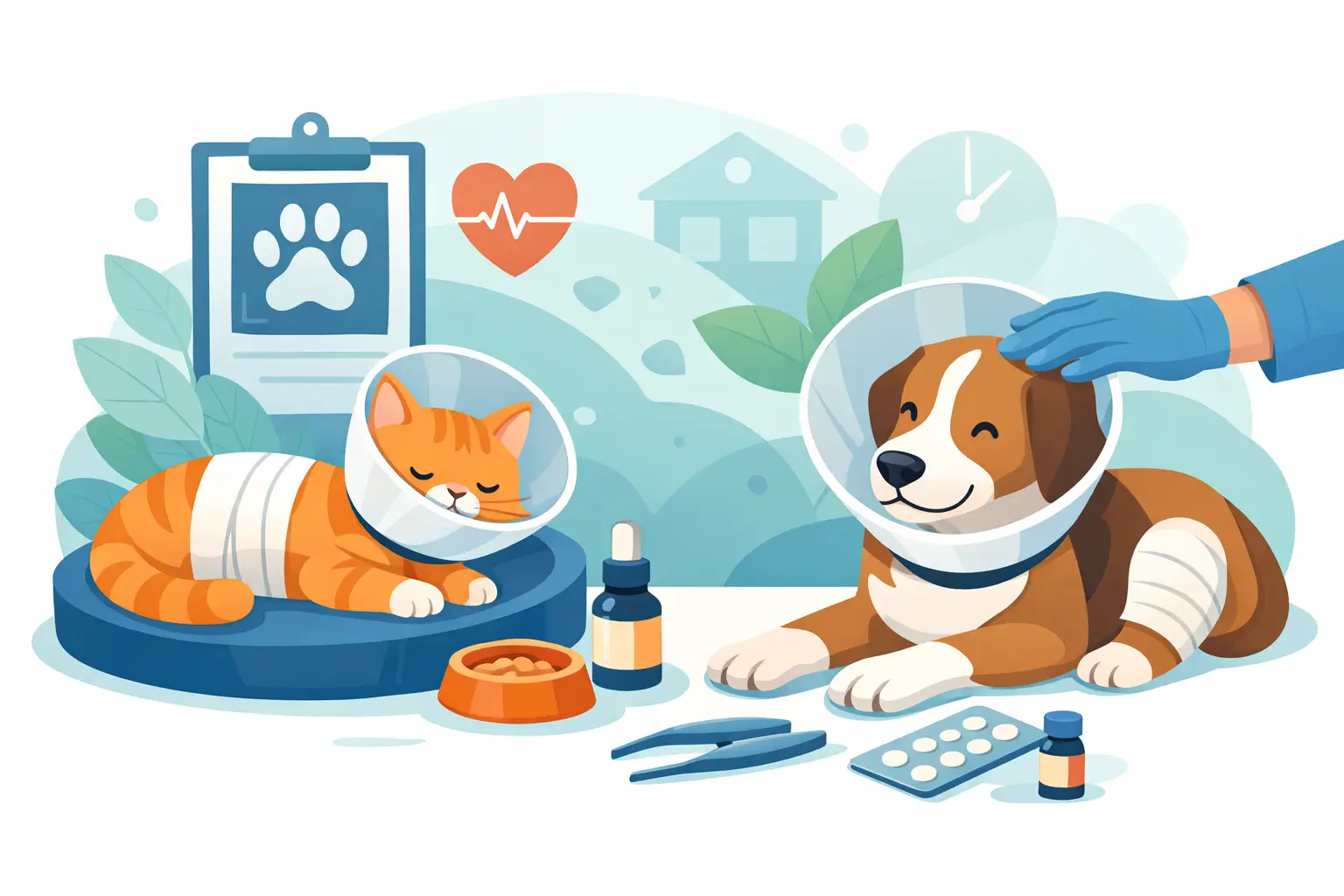
A recovery collar, soft cone, surgical suit, or other protective device is not optional if your pet is licking or chewing the site. A few minutes of determined licking can introduce bacteria or remove sutures. If the device rubs, prevents eating or drinking, or your pet can still reach the incision, contact your veterinary team for an adjustment or a safer alternative.
Give medications safely and on schedule
Pain control is a medical necessity, not a luxury. Pets may hide discomfort, yet pain can reduce appetite, limit rest, and slow recovery. Give all prescribed medications at the dose and schedule on the label, and finish antibiotics exactly as directed unless your veterinarian tells you otherwise.
Never substitute human pain relievers. Ibuprofen, naproxen, acetaminophen, and many other household medications can be dangerous or toxic to dogs and cats. If your pet vomits after medication, misses a dose, seems excessively sedated, or develops diarrhea, do not guess about the next dose. Call for guidance.
Some medications should be given with food, while others have different instructions. If hiding a pill in a treat is allowed, use a small amount so you can be confident the full dose was swallowed. Keep a written medication log if more than one family member is helping with care.
Eating, Drinking, and Bathroom Habits After Surgery
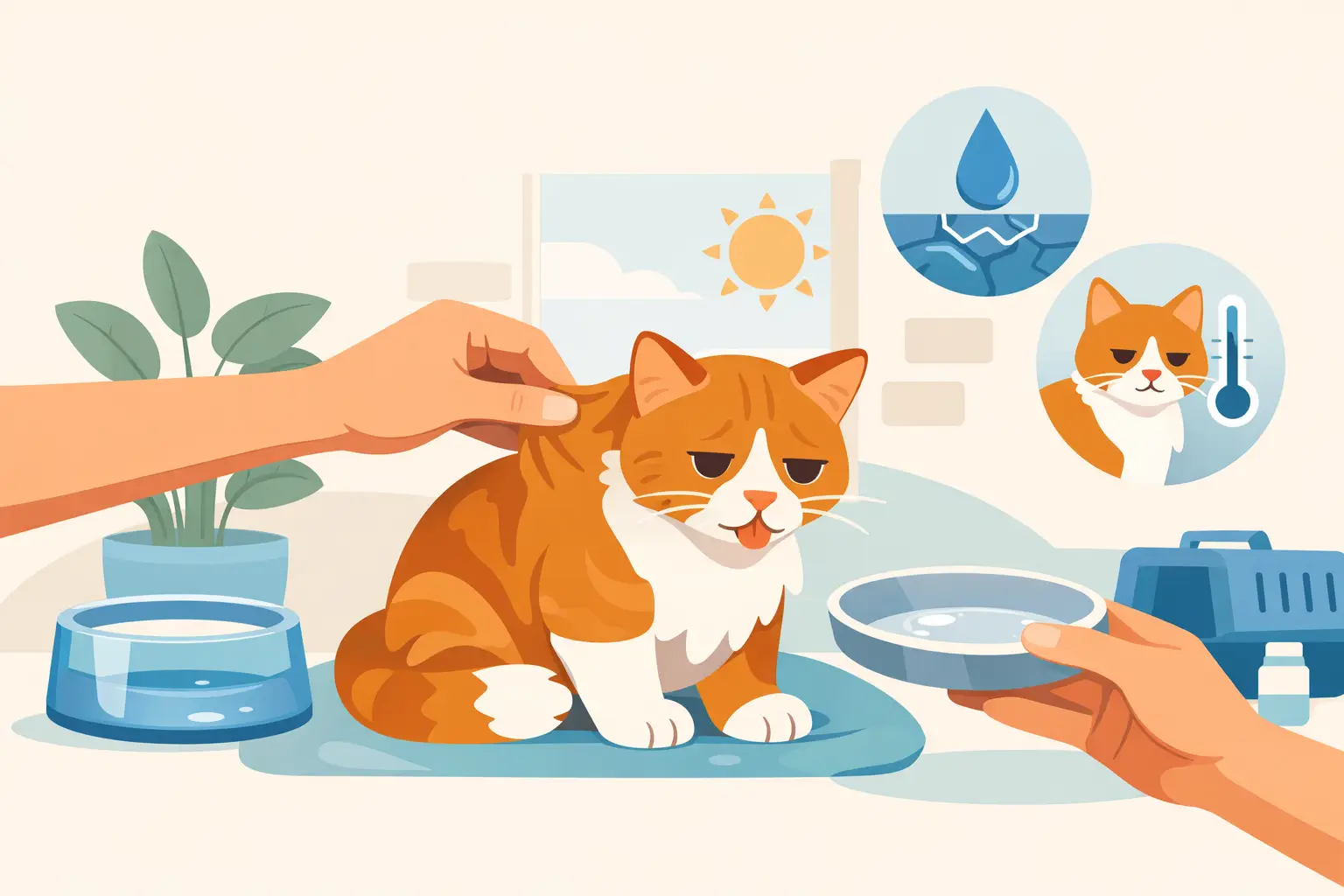
Anesthetic medications can cause nausea and reduce appetite for the first evening. Offer a small meal according to your discharge directions and provide fresh water nearby. Many pets return to normal eating within a day, but appetite expectations vary based on the procedure, medications, and underlying condition.
Watch for repeated vomiting, refusal to drink, persistent lack of appetite, or difficulty swallowing. A pet that has had abdominal surgery, dental surgery, or a procedure involving the urinary tract may have more specific feeding instructions, so follow those carefully.
Monitor urination and bowel movements as well. Your pet may not have a bowel movement for a day or two after surgery because of fasting, anesthesia, reduced food intake, and less activity. Straining without producing urine, inability to urinate, repeated vomiting, or a painful, swollen abdomen requires prompt veterinary attention.
For cats, be especially mindful of litter-box behavior. Place the box where your cat can reach it without climbing or jumping, and use a low-sided box if mobility is limited. Any cat that repeatedly enters the litter box but produces little or no urine should be evaluated immediately.
Help Your Pet Rest Without Adding Stress
Recovery does not have to mean boredom and frustration. Quiet companionship, gentle brushing away from the incision, calm talking, and approved food puzzles can help some pets settle. Ask before offering chews, treats, or enrichment toys, particularly if your pet has had oral, abdominal, or gastrointestinal surgery.
Keep the household routine predictable. Children should understand that a recovering pet needs space, and other animals should be separated if they encourage play or investigate the incision. Cats may need to be kept indoors even if they normally go outside.
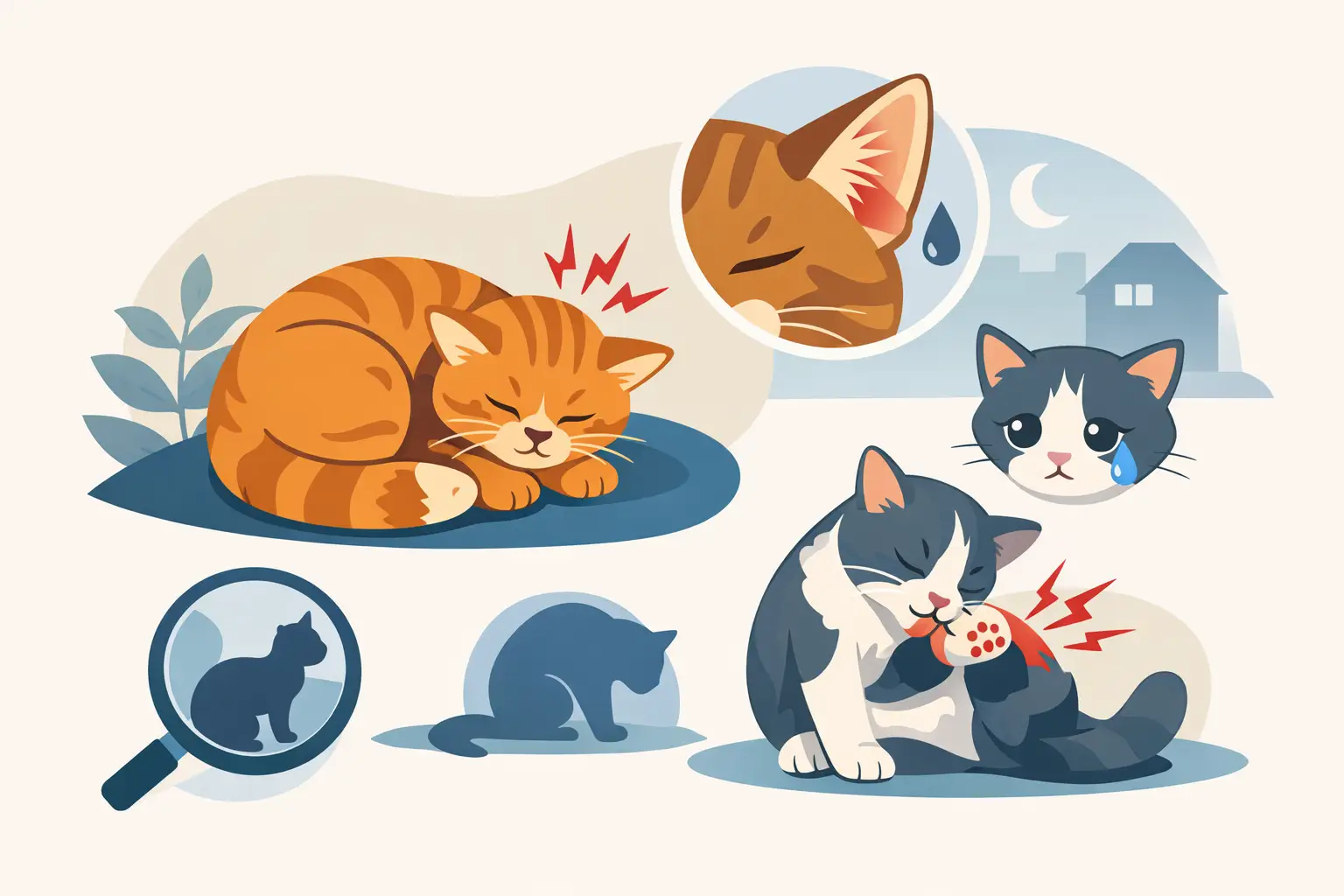
Some pets become restless because pain is not fully controlled, while others react to confinement or medication effects. Do not assume pacing, panting, whining, hiding, or irritability is simply bad behavior. A quick conversation with your veterinarian can help distinguish normal adjustment from a problem that needs treatment.
Know Which Changes Need a Call
Your instincts matter. If your pet seems worse rather than gradually more comfortable, it is appropriate to call. Contact your veterinary team promptly for incision discharge, a bad odor, opening of the incision, increasing redness or swelling, uncontrolled licking, significant bruising, or a bandage that slips, gets wet, or appears too tight.
Also call for repeated vomiting, diarrhea that persists, trouble breathing, pale gums, collapse, marked weakness, severe pain, refusal of all food or water, or unusual behavior that concerns you. For some signs, waiting until the next business day is not safe. Difficulty breathing, collapse, uncontrolled bleeding, inability to urinate, or sudden severe pain should be treated as an emergency.
When you call, have your pet’s discharge paperwork nearby. Be ready to describe when the change started, which medications were given, whether your pet has eaten or urinated, and what the incision looks like. A clear photo may be helpful if your team asks for one, but it should never delay emergency care.
Recovery Follow-Ups Are Part of the Procedure
Recheck appointments allow the veterinary team to assess healing, remove sutures or staples when needed, adjust medications, and decide when activity can safely increase. Even if the incision looks good from the outside, deeper tissue may still be healing.
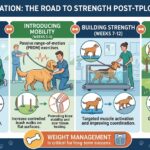
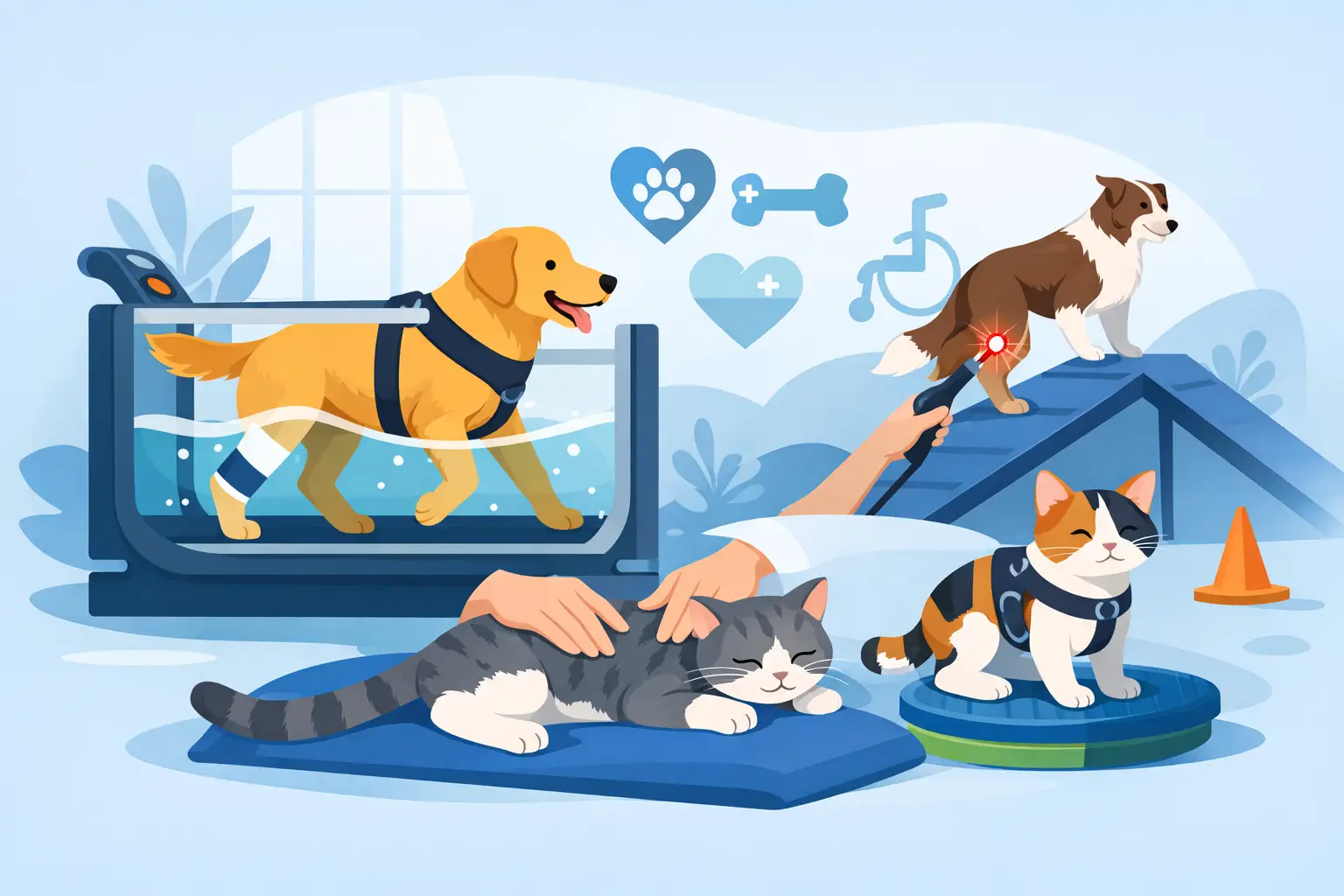
For pets recovering from complex orthopedic, neurologic, or mobility-related surgery, rehabilitation can be a meaningful part of the plan. Controlled therapeutic exercise, hydrotherapy, underwater treadmill sessions, and other veterinarian-directed therapies may help restore comfort, strength, and safe movement. The right approach depends on the diagnosis, procedure, age, and individual progress.
At AV Veterinary Center, our team can help families in Lancaster, Palmdale, and the Antelope Valley understand each stage of recovery, from incision checks and pain management to advanced rehabilitation support. A calm home, careful observation, and timely communication give your pet the best chance to return to the routines they love.